

When people look for a rugged phone, they often come across terms like “MIL-STD-810” or “MIL-STD-810H” in the specifications. The name may sound technical, but it is commonly used to describe how a device has been tested against demanding environmental conditions.
But what does MIL-STD testing actually mean for a phone? Does it mean the device has passed every possible durability test, and how is it different from an IP rating? To answer these questions, it helps to first understand what MIL-STD-810 is and how its testing methods are used for electronic devices.
What Is MIL-STD-810?
MIL-STD-810 is a U.S. Department of Defense test method standard titled “Environmental Engineering Considerations and Laboratory Tests.” It was developed for military equipment, but the standard can also be tailored for commercial products. Rather than defining one universal durability test, it provides a framework for evaluating how equipment may respond to environmental stresses throughout its service life.
The name itself can be broken down simply:
- MIL — Military
- STD — Standard
- 810 — The standard number
- H — The revision/version designation
The current active record is MIL-STD-810H Change 1, dated May 18, 2022.
One important point is that MIL-STD-810 does not require every product to undergo every test in the standard. Instead, its environmental tailoring process is used to select and adapt relevant tests according to the product's intended environment and expected service conditions. This means that a phone described as “MIL-STD-810H tested” should not automatically be interpreted as having passed every MIL-STD-810H test. The specific methods and conditions used for the device are important when evaluating the claim.
What Does MIL-STD-810 Test?
MIL-STD-810 covers a wide range of environmental conditions that equipment may encounter during transportation, storage, or actual use. The standard includes many test methods, and the relevant ones can be selected and tailored according to the environment in which a product is expected to operate.
Some of the environmental stresses covered by MIL-STD-810 include:
- High and low temperatures — Tests how equipment responds to very hot or cold environments and whether it can continue to operate under those conditions.
- Temperature shock — Examines the effects of sudden changes between different temperatures, which can place additional stress on a device and its components.
- Humidity — Evaluates how prolonged exposure to moisture in the air may affect the equipment.
- Rain — Simulates exposure to rainfall and examines whether the equipment can continue functioning after getting wet.
- Dust and sand — Tests how airborne particles may affect a device, particularly when it is used in dry or dusty environments.
- Vibration — Simulates repeated vibration that equipment may experience during transportation or operation.
- Shock — Evaluates the effects of sudden physical impacts or mechanical shocks on the equipment.
- Altitude — Examines how changes in atmospheric pressure associated with high-altitude environments may affect device operation.
- Solar radiation — Tests the potential effects of prolonged exposure to sunlight and associated environmental conditions.
- Other environmental conditions — MIL-STD-810 also contains methods for other stresses, including explosive atmosphere, fungus, icing/freezing rain, and salt fog, depending on the intended application.
These tests are not intended to represent a single checklist that every product must complete. A manufacturer or testing organization selects appropriate methods based on the product's expected environment, then defines the relevant procedures and conditions. This is why two products carrying a MIL-STD-810 claim may have been evaluated against different combinations of tests.
What Does MIL-STD-810 Mean for a Phone?
For a phone, MIL-STD-810 testing generally means the device has been evaluated against selected environmental stresses that may occur during demanding use. Depending on the test methods chosen, this can include conditions such as drops and shock, vibration, extreme temperatures, humidity, rain, dust, or other environmental exposure.
In practical terms, this can be useful for people who regularly use their phones outdoors, at work sites, while traveling, or in other environments where a standard smartphone may face more physical and environmental stress. A phone that has undergone relevant MIL-STD-810 testing may be designed and tested with these conditions in mind, rather than only everyday indoor use.
However, MIL-STD-810 should not be interpreted as a guarantee that a phone is indestructible. The standard does not give a phone a single durability score, and not every MIL-STD-810 phone necessarily undergoes the same tests. To understand what a particular device has actually been tested for, you need to look at the specific test methods, procedures, and conditions used.
MIL-STD-810 vs. IP Rating
MIL-STD-810 and IP ratings are often listed together on rugged phones, but they serve different purposes. MIL-STD-810 focuses on environmental stresses and how equipment responds to selected test conditions, while an IP rating describes the degree of protection an enclosure provides against the intrusion of solids and water. MIL-STD-810 is a U.S. military test-method standard, while the IP Code is defined by IEC 60529.
| Feature | MIL-STD-810 | IP Rating |
|---|---|---|
| Main purpose | Evaluates equipment under selected environmental stresses | Defines protection against the ingress of solids and water |
| Origin | U.S. Department of Defense | International Electrotechnical Commission (IEC) |
| What it covers | A broad range of environmental and mechanical stresses | Solid particles and water |
| Common phone-related tests | Shock, vibration, temperature, humidity, rain, dust, and other selected conditions | Dust protection and water protection |
| How it is expressed | Usually identified by the standard and revision, such as MIL-STD-810H | Usually expressed as codes such as IP68 or IP69K |
| Does it use one fixed test for every product? | No. Relevant methods and conditions are selected and tailored to the product and its expected environment | The IP code corresponds to defined levels of protection against solids and water |
| What it tells you about a phone | Indicates that the phone has been evaluated against particular environmental stresses | Indicates its rated protection against dust and/or water ingress |
| What it does not tell you | It does not provide a single overall durability score or mean that every test method was performed | It does not describe resistance to drops, vibration, extreme temperatures, or other mechanical stresses |
These standards therefore complement rather than replace each other. For example, a phone with both a MIL-STD-810H claim and an IP68 rating has information about two different aspects of its protection: the MIL-STD-810 testing relates to selected environmental stresses, while the IP68 rating addresses enclosure protection against dust and water under the applicable IP test conditions.
This is why both specifications can be useful when evaluating a rugged phone. However, neither label alone tells the entire story. For MIL-STD-810, the specific test methods and conditions matter; for an IP rating, the exact IP code matters.
How Is a Phone Tested to MIL-STD-810H?
A phone is not simply put through every test listed in MIL-STD-810H. The testing process generally starts by identifying the environmental conditions the device is expected to encounter, then selecting and tailoring the relevant test methods.
- Identify the expected environment — Determine where and how the phone is expected to be used, including possible temperature, moisture, dust, vibration, or impact exposure.
- Select relevant test methods — Choose the MIL-STD-810H methods that correspond to those expected environmental stresses.
- Define test conditions — Establish factors such as exposure time, temperature range, vibration level, or impact conditions according to the selected procedure.
- Conduct the tests — Expose the phone to the specified laboratory conditions while following the applicable test procedure.
- Evaluate the results — Check whether the phone continues to meet the required performance or operational criteria after the test.
The exact procedure can therefore vary from one device to another. This tailoring approach is an important part of understanding what a MIL-STD-810H claim actually represents.
Choosing a High-Quality Rugged Phone

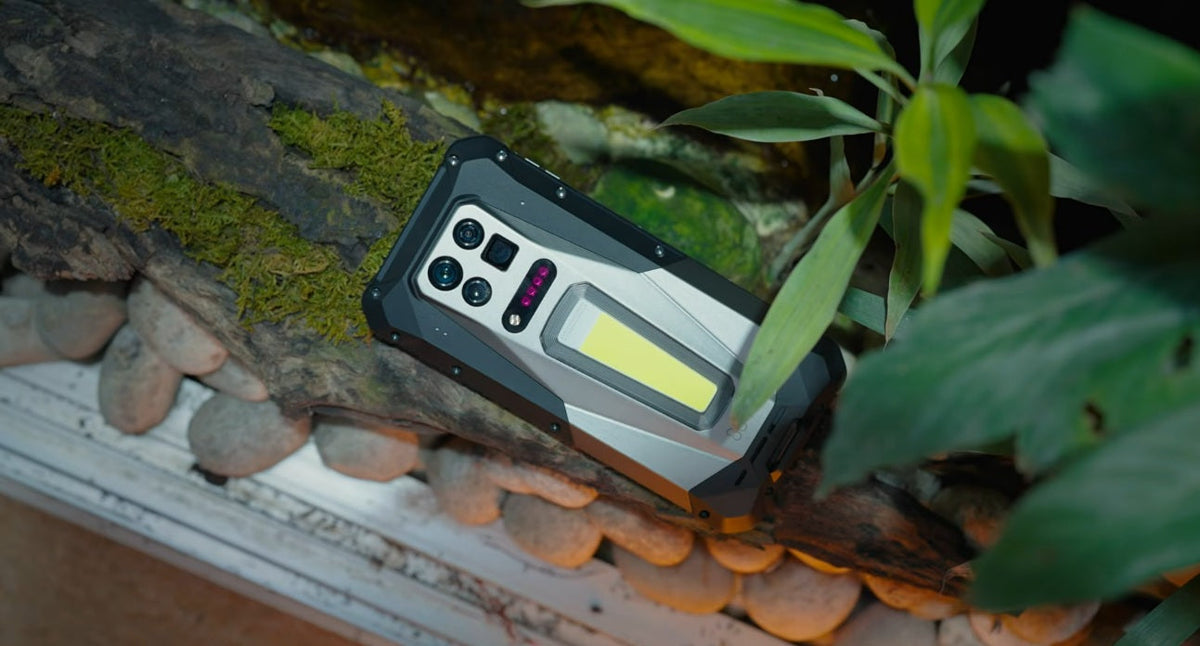
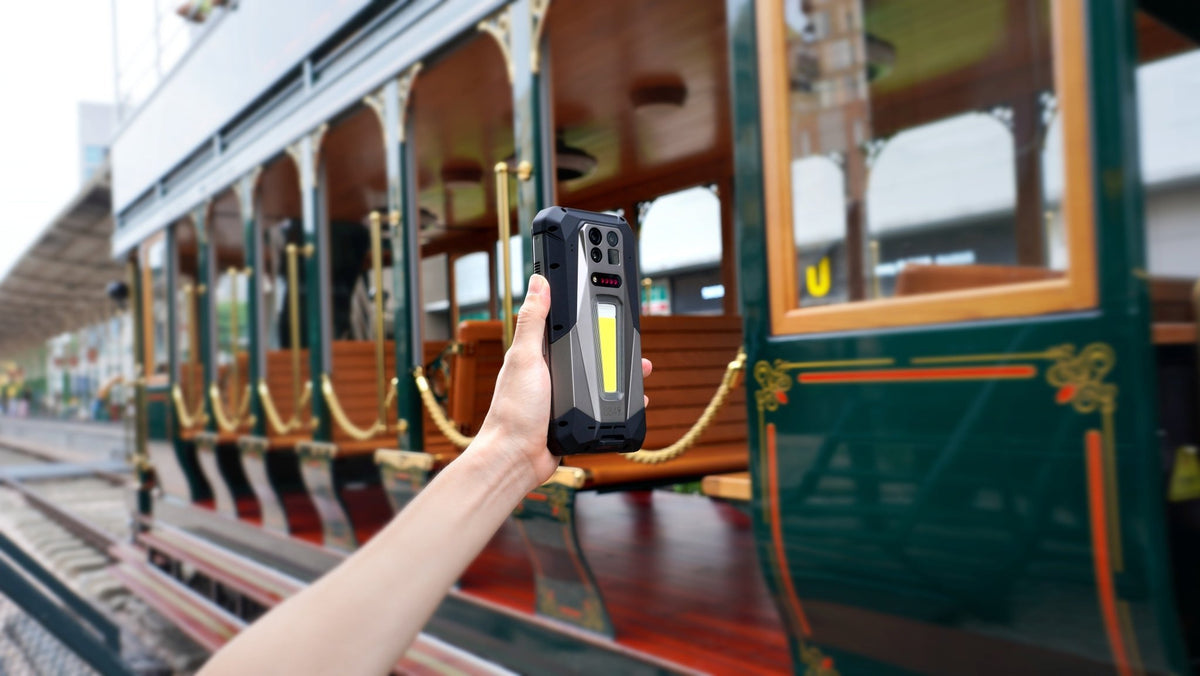
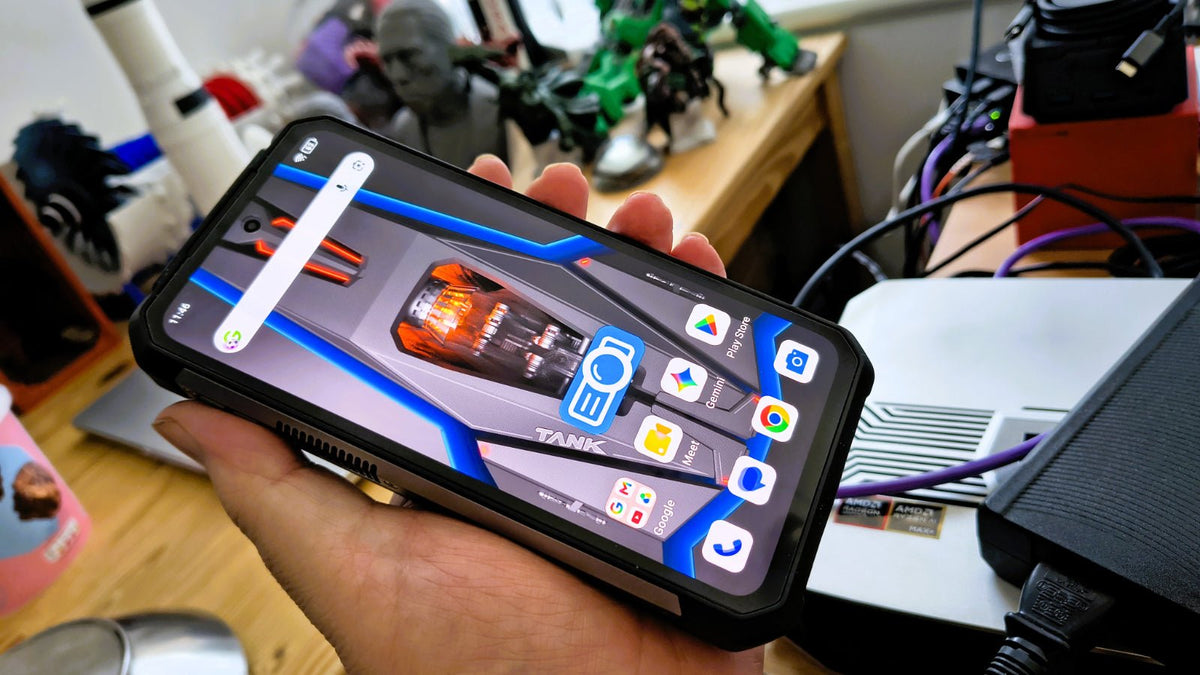
The 8849 Tank 5 Pro is a rugged smartphone designed for demanding outdoor and field environments, combining durability with features that go beyond a typical phone. It brings thermal imaging, projection, a large battery, and flexible connectivity into one device.
- Ultra-Wide Thermal Imaging — FLIR Lepton 3.1R thermal imaging with a 95° field of view, 160×120 native resolution, and enhanced 480×360 output for inspections, search and rescue, and other applications where detecting temperature differences matters.
- 2K Projector — A 220-lumen DLP projector with 2048 × 1080 resolution, laser autofocus, and ±45° keystone correction for projecting images and information onto a larger surface.
- 17,600mAh Battery — A high-capacity battery paired with 120W fast charging, providing extended runtime for outdoor activities and field work.
- eSIM Connectivity — Supports eSIM alongside Nano SIM configurations, allowing users to switch between supported carrier profiles and maintain flexible connectivity while traveling or working across regions.
Final Thoughts
MIL-STD-810 is useful for understanding how a device has been evaluated against selected environmental stresses, but the specific tests still matter. For a rugged phone, it is one part of the bigger picture alongside specifications such as its IP rating, construction, and features designed for demanding environments.
If you are exploring rugged phones built for outdoor activities, field work, or other challenging conditions, you can also take a closer look at 8849 phones and the different features they offer.
FAQs
Is MIL-STD-810H good?
MIL-STD-810H can be a useful indication that a device has been evaluated against selected environmental stresses using methods from the H revision of the standard. However, the label itself is not a universal durability rating. It does not mean that every MIL-STD-810H test was performed or that the device is resistant to every possible environmental condition. The specific test methods and conditions are more important when evaluating what the claim means for a particular phone.
What are the key differences between MIL-STD-810H and 810G guidelines?
MIL-STD-810H is a later revision of the MIL-STD-810 standard and updated the document's test methods, procedures, and environmental-tailoring guidance compared with Revision G. Revision G was published in 2008, followed by Change 1 in 2014, while Revision H was published in 2019, followed by Change 1 in 2022.
The important point is that 810H should not simply be understood as “810G but more durable.” The revisions reflect updates to how environmental conditions are considered and how relevant test methods are selected and applied. Because MIL-STD-810 is based on environmental tailoring, the specific methods and conditions used for a product remain more informative than the letter alone.
Share:
Choosing the 4 Best Rugged Devices in 2026