

Tablets are no longer limited to entertainment, communication, and everyday office tasks. In manufacturing, logistics, construction, field service, and other demanding environments, workers often need a mobile device that can handle more than a standard consumer tablet. This is where industrial tablets come in. Built for more challenging working conditions, they combine the portability of a tablet with features designed for durability, reliable operation, and practical field use. Understanding their benefits, common applications, and overall value can help businesses determine when an industrial tablet is a better choice than a conventional device.
What Are Industrial Tablets?
Industrial tablets are portable computing devices designed for use in workplaces where equipment may be exposed to demanding conditions or require reliable operation over long periods. They are commonly used for tasks such as accessing work applications, collecting and entering data, monitoring equipment, viewing documents, and communicating with other systems while workers are on the move. Depending on the intended environment, an industrial tablet may include features such as reinforced construction, protection against dust and water, a high-capacity battery, bright displays, and a wider range of connectivity options.
The exact design of an industrial tablet varies by industry and application. A device used on a factory floor may need strong protection against drops, dust, and vibration, while one used by a field technician may place more emphasis on outdoor visibility, battery life, connectivity, and portability. In general, the purpose of an industrial tablet is to provide a dependable mobile computing platform that can continue supporting everyday work when the environment or workload is more demanding.
Key Benefits of Industrial Tablets
The design of an industrial tablet is shaped by the conditions in which it is expected to work. Beyond providing a portable screen and computing platform, these devices can offer several practical advantages for businesses and workers who need reliable technology in demanding environments.
Built for Demanding Conditions
Industrial tablets are designed to withstand conditions that can be difficult for ordinary electronic devices. Depending on the model, they may feature reinforced housings and protection against drops, dust, water, vibration, and other common workplace hazards. This added durability can make them more suitable for factories, warehouses, construction sites, and outdoor work where a tablet may be exposed to rough handling or changing conditions.
Reliable for Field Work
Many industrial tasks take place away from a desk or controlled indoor environment. An industrial tablet allows workers to access applications, records, instructions, and other information directly at the job site. Features such as a durable design, strong connectivity, and a battery designed for extended use can help workers stay productive without having to return to a fixed workstation.
Supports Mobile Data Collection
Industrial tablets can make it easier to collect, review, and update information where the work actually takes place. Workers can use them to record inventory, inspect equipment, update service records, scan items, or enter production data without relying on paper forms or transferring information later. With the right software and accessories, a tablet can become a central tool for keeping field data accurate and accessible.
Reduces Downtime and Replacement Costs
A device that frequently fails or needs to be replaced can create costs beyond the price of the hardware itself. Industrial tablets are built with long-term workplace use in mind, which can help reduce disruptions caused by accidental damage or unsuitable operating conditions. While they may require a higher initial investment, their durability and reliability can provide better value when a device is expected to remain in service for demanding work.
Provides Flexible Connectivity and Integration
Industrial tablets can support a range of connectivity options to fit different working environments and business systems. Depending on the model, this may include Wi-Fi, cellular networks, Bluetooth, GPS, USB ports, and other interfaces for connecting peripherals or equipment. This flexibility allows an industrial tablet to serve not just as a standalone computer, but as part of a broader workflow involving software, scanners, sensors, machinery, and communication systems.
Common Uses of Industrial Tablets

Industrial tablets can support a wide range of tasks because they combine mobile computing with features designed for demanding work environments. Their applications vary by industry, but the common goal is to give workers access to information, software, and communication tools directly where the work is being done.
Some common uses of industrial tablets include:
- Manufacturing and production: Monitoring production processes, accessing work instructions, recording production data, and checking equipment status on the factory floor.
- Warehousing and logistics: Managing inventory, scanning products, updating order information, and coordinating tasks across warehouses and distribution centers.
- Construction and field service: Viewing drawings and project documents, recording inspection results, managing work orders, and communicating with teams at job sites.
- Transportation and fleet management: Accessing navigation and dispatch systems, tracking vehicles, recording delivery information, and communicating with drivers or field teams.
- Retail and inventory management: Checking stock levels, processing inventory updates, and accessing product or order information while moving around a store or storage area.
- Utilities and infrastructure: Inspecting equipment, recording maintenance data, accessing technical information, and communicating with control or support teams in the field.
- Public safety and emergency response: Accessing maps, incident information, communication systems, and other critical data when working outside a traditional office environment.
These applications show that industrial tablets are not limited to a single type of workplace. Their value comes from being adaptable to different workflows while providing a mobile platform that can operate in environments where portability, durability, and reliable access to information are important.
What to Look for in an Industrial Tablet
The right industrial tablet depends largely on the environment and tasks it needs to handle. A device used indoors for inventory management may have different requirements from one used on a construction site or in outdoor field service. Before choosing a model, it is worth considering the following factors:
- Durability and protection: Look for a construction that can withstand drops, vibration, dust, water, and other conditions common in the intended workplace.
- Display: A clear, responsive screen with good brightness can make a significant difference when workers need to read information under different lighting conditions.
- Battery life: Long battery life is important for extended shifts and field work where access to power outlets may be limited.
- Performance: The processor, memory, and storage should be sufficient for the applications and workloads the tablet will run.
- Connectivity: Wi-Fi, cellular connectivity, Bluetooth, GPS, and physical ports can be important depending on how the tablet needs to communicate with other devices and systems.
- Operating system and software: The tablet should support the applications already used by the business and provide a practical way to manage and update the device.
- Mounting and accessories: Vehicle mounts, docking stations, scanners, keyboards, and other accessories can make an industrial tablet easier to integrate into a specific workflow.
- Portability: Even a durable tablet should be practical for workers who need to carry or operate it throughout the day.
For particularly demanding environments, a rugged tablet can be a suitable type of industrial tablet to consider. Rugged models place greater emphasis on physical protection while retaining the portability and functionality of a tablet.
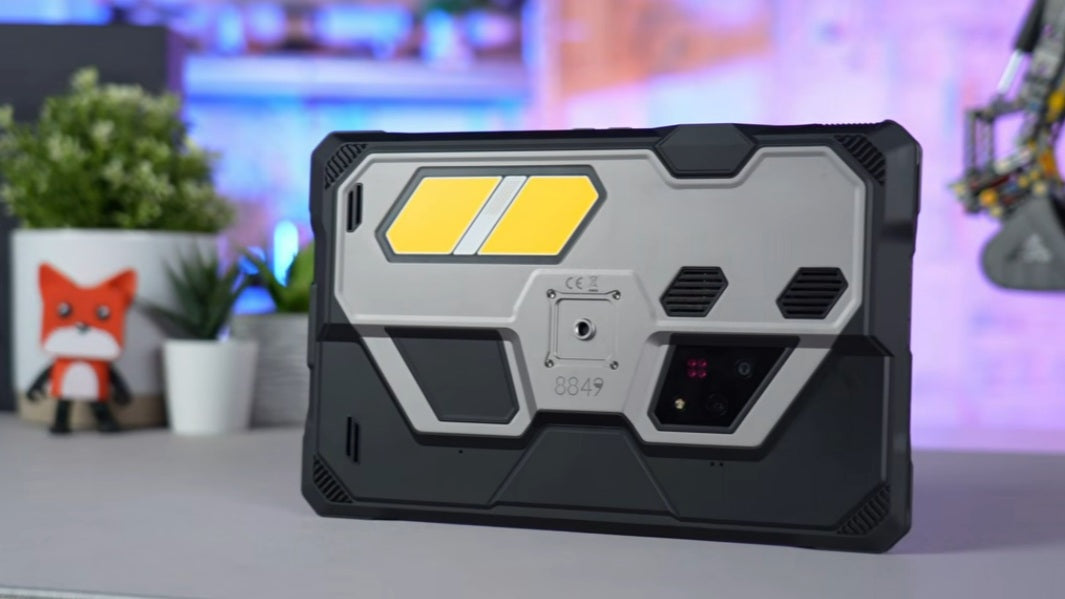
For example, the 8849 Tank Pad Ultra combines a rugged design with a large battery, night vision, and a built-in 1080p projector, making it an example of how a rugged tablet can add specialized capabilities beyond basic mobile computing.
Industrial Tablets vs. Consumer Tablets
Industrial tablets and consumer tablets may look similar at first, but they are designed around different priorities. An industrial tablet is generally built for demanding work environments, where durability, long operating time, connectivity, and specialized functions can be more important than having the thinnest or lightest device. A consumer tablet, on the other hand, is usually designed for everyday activities such as browsing, entertainment, communication, and general productivity.
The differences become clearer when looking at the factors that matter in real-world use:
| Factor | Industrial Tablet | Consumer Tablet |
|---|---|---|
| Durability | Designed to handle drops, vibration, dust, water, and demanding work conditions | Generally designed for everyday indoor use |
| Environmental protection | Often includes higher levels of dust and water protection | Usually limited compared with industrial or rugged models |
| Battery life | Often prioritizes long working periods and field use | Typically balanced around everyday use and portability |
| Connectivity | May include cellular networks, GPS, NFC, multiple ports, and specialized interfaces | Usually focuses on Wi-Fi, Bluetooth, and standard connectivity |
| Specialized features | May include scanners, programmable keys, rangefinders, night vision, thermal imaging, or other work-oriented tools | Usually focuses on cameras, entertainment, communication, and general productivity |
| Typical use | Manufacturing, logistics, construction, field service, utilities, and other demanding workplaces | Home, education, office work, entertainment, and everyday mobile use |
| Example | 8849 TANK Pad Ultra — rugged protection, 5G, large battery, night vision, and a built-in projector | Apple iPad (A16) — general-purpose tablet designed around everyday productivity and entertainment |
| Cost | Higher — specialized hardware and protection generally increase the initial investment | Moderate — wider range of models and configurations |
It is worth noting that industrial and rugged tablets overlap considerably. A rugged tablet can serve as an industrial tablet when its durability, connectivity, battery capacity, and specialized features match the requirements of the job. The TANK Pad Ultra, for example, combines IP68 and IP69K protection with a 23,400mAh battery, 5G connectivity, night vision, a laser rangefinder, and a built-in 1080p projector, illustrating how a rugged tablet can be adapted to demanding field and industrial applications.
👉Read more: Rugged Tablet Price Guide 2026
Are Industrial Tablets Worth the Investment?
Industrial tablets can be worth the investment when a device is expected to work reliably in demanding conditions. Their higher initial cost can be offset by greater durability, fewer device replacements, less downtime, and better support for field-based workflows. For businesses where a damaged or unreliable tablet can interrupt daily operations, these factors can make the overall cost of ownership more important than the purchase price alone.
However, an industrial tablet is not necessary for every situation. If a tablet will mainly be used for browsing, basic office tasks, or entertainment in a controlled environment, a consumer model may be more practical. The real value of an industrial tablet comes from matching its durability and specialized capabilities to the conditions and workload it will actually face.
FAQs About Industrial Tablets
Are industrial tablets waterproof?
Many industrial tablets are designed with strong water and dust protection, often rated IP68 or higher. This means they can provide substantial protection against water exposure and dust, although the exact level of protection and testing conditions vary between models. Users should always check the specific IP rating before using a tablet in wet environments.
Are industrial tablets suitable for outdoor use?
Yes. Industrial tablets can be well suited to outdoor work when they offer features such as strong environmental protection, a bright display, long battery life, and reliable connectivity. For example, the 8849 TANK Pad Ultra combines IP68/IP69K protection, a large-capacity battery, 5G connectivity, and night vision, making it suitable for demanding outdoor and field applications.

Share:
Does an Indestructible Phone Exist?