

Most of us have a charging routine we don't think twice about: plug the phone in while making coffee, and by the time it's poured, the battery has already climbed past 50%. That jump is fast charging at work, and it's become such a normal part of daily life that it's easy to forget how much engineering actually sits behind it.
It's also a topic that splits opinion. Some people see fast charging as one of the more genuinely useful upgrades phones have gotten in the last decade; others hesitate, worried that pushing more power into a battery faster means shortening its life, or worse, creating a real safety risk. Both reactions come from somewhere real. This guide sorts out which concerns hold up and which are outdated myths, starting with what fast charging actually is.
What Is Fast Charging?
Fast charging is exactly what it sounds like: a charging technology that delivers more electrical power to a battery than standard charging, so the phone reaches a full charge in a fraction of the time. The "standard" most people grew up with tops out around 5 watts — enough to charge a phone overnight, but painfully slow if you're watching the percentage climb in real time. Fast charging raises that ceiling considerably, with most phones today supporting somewhere between 18W and 65W, and some flagship and rugged devices pushing well past 100W.
That wattage figure is just voltage multiplied by current, and manufacturers raise it by increasing either or both — as long as the battery, chipset, and charging circuit are all built to handle it safely. That's also why fast charging isn't one single standard: a phone rated for 33W and one rated for 120W are both technically "fast charging," just operating at very different speeds. What actually makes those higher numbers possible, and how a phone manages it without overheating or wearing down the battery, comes down to some genuinely clever engineering.
How Does Fast Charging Work?
Fast charging isn't just a matter of plugging into a beefier charger and letting it rip. The moment you connect a fast-charging phone to a compatible charger, the two run through a quick negotiation — checking what voltage and current combination both sides can safely handle, based on protocols like USB Power Delivery (PD) or Quick Charge. Once that's settled, power starts flowing at the highest safe rate, but it doesn't stay at that rate for the whole session. Charging actually happens in three distinct phases:
-
Fast charge phase — Right after you plug in, the phone draws power at or near its maximum rated wattage. This is where most of the speed happens, often taking a battery from empty to 50-60% in well under 30 minutes on a high-wattage charger.
-
Tapering phase — As the battery fills up, the charging circuit gradually reduces the current to avoid stressing the cells, even though the charge itself is still relatively quick.
-
Trickle (topping) phase — Once the battery gets close to full, charging slows down considerably, delivering only small amounts of power to top it off gently rather than risk overcharging.
That's also why phone makers tend to advertise numbers like "50% in 20 minutes" rather than promising a full charge in that same window — the fastest part of the process is really just the first phase. It's a deliberate trade-off: charge aggressively at the start, then ease off as the battery fills, which is what lets fast charging be both quick and safe for the cells inside.
Why Do People Need Fast Charging?
The honest answer is that fast charging solves a problem most people didn't really choose to create: phones have become the one device relied on for nearly everything, and that reliance has outpaced how patient anyone's willing to be about keeping it charged.
A dead phone today doesn't just mean missing a text — it can mean losing turn-by-turn directions mid-drive, being unable to pay at checkout, or missing a call that actually mattered. At the same time, bigger displays, 5G connections, and camera-heavy apps all pull more power than phones did even five years ago, so despite larger batteries, most people are still charging more often, not less.
What's changed just as much is how much time people actually have to charge. Few people sit near an outlet for hours at a stretch anymore — a charge has to fit into a lunch break, a commute, or the fifteen minutes between meetings, and it needs to make a real difference in that window.
That's especially true for anyone who spends real time away from a reliable outlet altogether: travelers, commuters, and people working outdoors or in the field don't get the luxury of an overnight charge, so a fast, meaningful top-up isn't a nice-to-have — it's what keeps a workday from grinding to a halt.
Is Fast Charging Dangerous?
Fast charging has a bit of an image problem. Ask around, and you'll find people who swear by it right alongside people who avoid it, worried it's somehow harder on the phone or outright unsafe to use regularly. That reputation didn't come from nowhere — early fast-charging tech, counterfeit accessories, and a handful of widely reported incidents over the years gave the technology a rough patch. But most of what people worry about today doesn't hold up quite the same way it might have a decade ago. Here's what comes up most often:
-
"It'll overheat my phone."
Fast charging does generate more heat than a standard charger, but certified phones are built with temperature sensors and charging chips that automatically slow down or pause charging if things get too warm.
-
"It'll wear out my battery faster."
There's some truth here — heat and charge speed do factor into long-term battery health — but it's a more nuanced relationship than an outright dealbreaker, and modern systems are engineered specifically to manage that trade-off.
-
"It could cause a fire or explosion."
This is the fear people remember most, usually tied to a specific news story, but nearly all of those cases trace back to damaged, counterfeit, or uncertified batteries and chargers — not the fast-charging standard itself.
-
"Cheap or off-brand chargers make it riskier."
This one holds up. A charger without proper safety certification can skip the safeguards that make fast charging safe in the first place, which is really where most genuine risk comes from.
Put together, the pattern is fairly consistent: the fear is usually real, but the cause tends to be a corner cut somewhere else — an uncertified charger, a damaged cable, a battery that was already compromised — rather than fast charging as a technology. Phones designed and certified for high-wattage charging go through extensive safety testing specifically to rule out these scenarios, which is a big part of why fast charging has become the default rather than the exception on modern phones.
Tank 5: Fast Charging Built for Rugged, Real-World Use

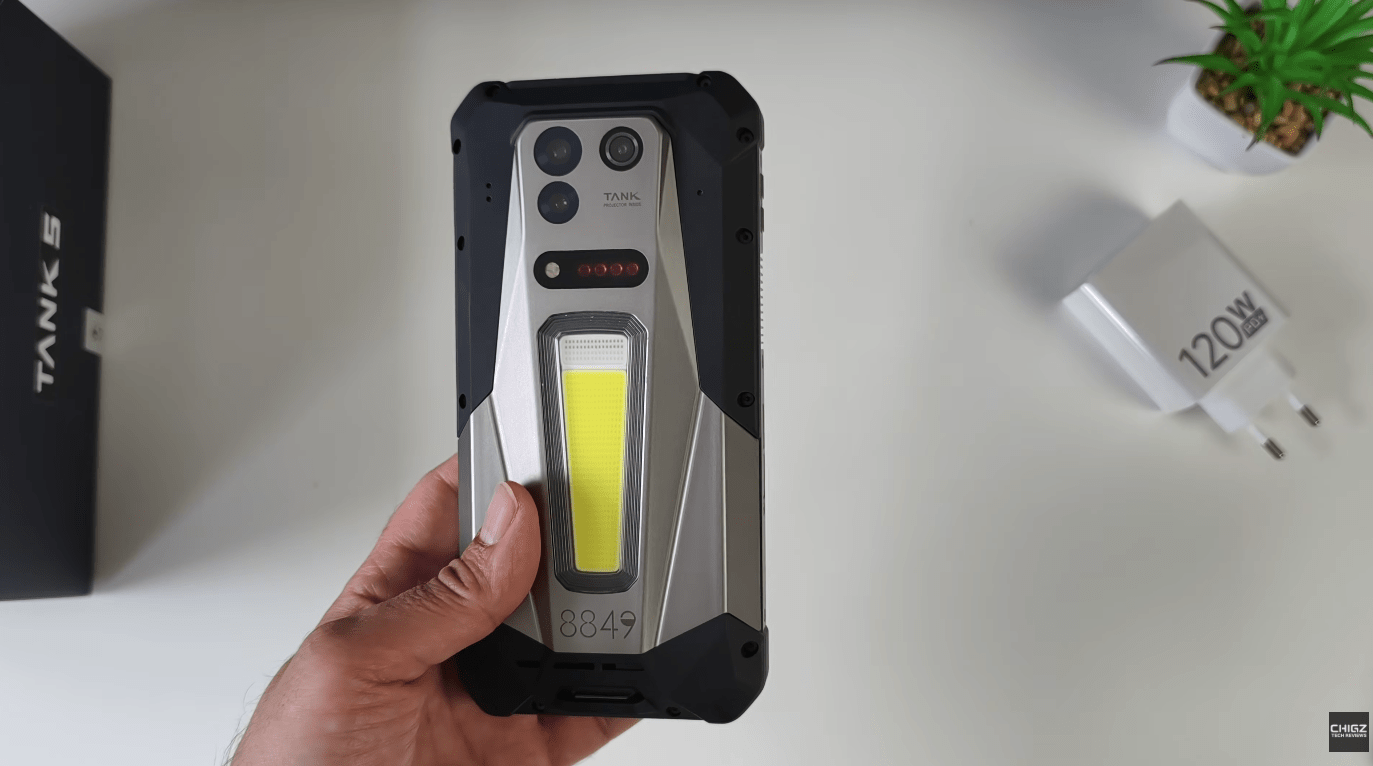
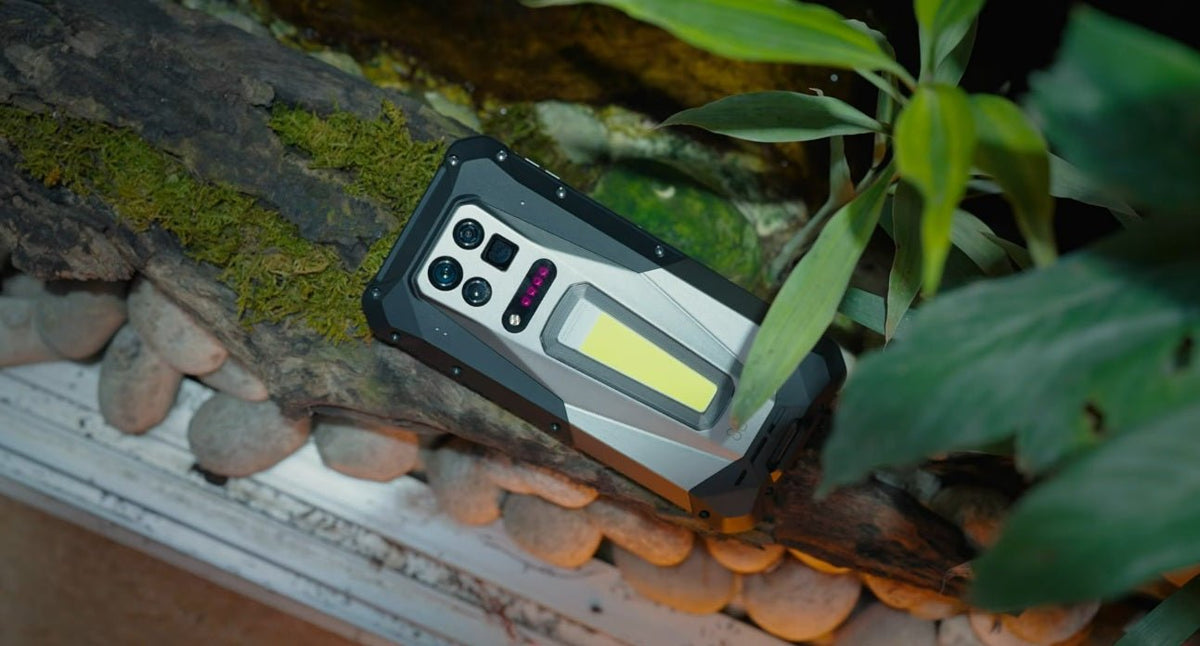
Tank 5 is 8849's flagship rugged phone, and it puts fast charging to a genuine test: a 17,600mAh battery large enough to run a built-in 2K projector for hours, survive multi-day trips off the grid, and hold up to drops, dust, and water along the way. A battery that size could easily take the better part of a day to fill with a standard charger, which is exactly the kind of downtime that doesn't work for the people this phone is built for. That's why 8849 built the Tank 5 around some of the fastest charging available on a rugged phone today.
-
120W fast charging — one of the highest charging speeds available on a rugged phone right now, sized to match a battery this large without leaving it tied to an outlet for hours.
-
Dual-cell battery design — the 17,600mAh capacity is split across two cells that charge in parallel, which is part of how the Tank 5 sustains high-speed charging without running hotter or wearing down faster than it should.
-
25W reverse wired charging — the Tank 5 can share its own charge with other devices over a wired connection, turning it into a backup power source for a headlamp, GPS unit, or second phone when there's no outlet around.
The Tank 5 is a good showcase of how 8849 phones approach charging in general: less about chasing a number for the spec sheet, and more about making sure a phone built for demanding, off-grid conditions can actually keep up with them.
Final Thoughts
Fast charging has quietly become one of those features nobody thinks about until it's missing — a real convenience when it's there, and mildly maddening on the rare device that still charges at a crawl. The concerns people raise about it are worth taking seriously, but they mostly trace back to bad chargers and worn-out batteries rather than the technology itself, and phones like the Tank 5 show what it looks like when charging speed is built in properly from the start: fast enough to match a big battery, and safe enough not to think twice about using every day.
FAQs
How Do I Turn On Fast Charging?
In most cases, there's nothing to manually switch on — fast charging kicks in automatically once you plug in a charger and cable that both support it, since the phone and charger negotiate the speed between themselves. What actually determines whether it works is the hardware: using the charger that came with the phone, or a certified equivalent rated for its full wattage, is what unlocks the top speed, while an older cable, a lower-wattage adapter, or a basic power bank will quietly fall back to standard charging instead.
What Is the Downside of Fast Charging?
The main trade-off is heat: charging at higher wattages generates more warmth in the battery than a slow trickle charge would, and heat is one of the biggest factors behind a battery's capacity fading over time. Well-built phones manage this with temperature sensors and charging chips that pull back the power automatically when needed, so the day-to-day impact is small, but it isn't zero — a phone fast-charged every single day for a few years will typically show a little more battery wear than one charged slowly. The other practical downside is simpler: you need the right charger and cable to actually get the speed; otherwise you're just charging at a normal rate anyway.

Share:
Night Vision: How Rugged Phones See in the Dark
What Is NFC: Definition, Benefits & Usage