
A rugged phone is built to survive drops, dust, water, and cold. But none of that matters if you cannot read the screen on a construction site at noon. Brightness is one of the most overlooked specifications on a rugged phone, and one of the most misunderstood. This guide explains how bright a rugged phone really needs to be, what the numbers on a spec sheet mean, and how to judge a display before you buy.
What Is a Nit, and Why Does It Matter?

A nit is a unit of luminance equal to one candela per square meter (cd/m²). In simple terms, it measures how much light a screen emits toward your eyes. The higher the nit rating, the brighter the display appears under the same conditions.
Brightness becomes especially important outdoors because ambient light competes with the screen. Sunlight reflecting off the glass can wash out the image, making text and icons hard to read. Direct sunlight can exceed 100,000 lux, which is why even a phone that looks bright indoors can appear dim outside.
Here are some practical reference points:
- Indoor office or home use: 100–300 nits is usually comfortable
- Bright indoor spaces or near windows: 300–500 nits
- Shade or overcast outdoor conditions: Around 400–700 nits
- Bright outdoor conditions (no direct sun): 800–1,000 nits starts to feel usable
- Direct sunlight: 1,000 nits or higher (especially in high-brightness mode) noticeably improves readability; many modern phones reach 1,500–2,000+ nits in this mode
For rugged phones used on construction sites, job sites, or outdoor work, the useful figure is often the sustained or high-brightness mode (sometimes called HBM) rather than the peak HDR number. Peak brightness is usually measured on a small portion of the screen and is more relevant for video highlights than for reading maps, messages, or work apps in full sun.
Understanding nits helps you compare phones more accurately and choose a display that stays readable in the lighting conditions you actually face.
Typical Brightness vs. Peak Brightness
Peak brightness is often the figure highlighted in product specs, but it does not always reflect what the screen can maintain during normal use.
Here are the key terms to understand:
- Typical brightness: The brightness level measured under standard testing conditions, often with the screen at a moderate content level.
- Sustained (or full-screen) brightness: The brightness the display can maintain over a longer period when showing everyday content, such as a bright webpage or map.
- Peak brightness: The highest output the screen can reach, usually for a short time and often only on a small portion of the display (for example, a bright highlight in an HDR video).
- High Brightness Mode (HBM): An automatic boost that many phones activate in strong ambient light. This is often the most relevant figure for outdoor readability.
OLED and AMOLED panels frequently show a large gap between peak and full-screen brightness. A phone advertised at 2,000 nits peak may deliver noticeably less when the entire screen is bright white or displaying light-colored content.
For outdoor and job-site use, sustained brightness or High Brightness Mode is generally more useful than the peak number. When only one brightness figure is listed, independent lab measurements can provide a clearer picture of real-world performance.
How Bright Should a Rugged Phone Be for Your Work?
Screen brightness needs vary widely depending on where and how you work. A phone that performs well under warehouse lighting may struggle in full sun on a construction site, while a high-brightness display can feel overly intense during night shifts. Matching the display to your typical lighting conditions helps ensure the screen stays readable without draining the battery unnecessarily or causing eye strain.
Use the table below as a practical guide:
| Working Environment | Recommended Brightness | Visibility Needs |
|---|---|---|
| Indoor offices and admin areas | 300–450 nits | Controlled indoor lighting |
| Warehouses and factories | 400–600 nits | Artificial lighting, occasional glare |
| Mixed indoor and outdoor work | 500–800 nits | Frequent transitions between environments |
| Construction, agriculture, surveying | 800–1,200+ nits | Direct sunlight and bright outdoor glare |
| Hiking, camping, and marine use | 800–1,200+ nits | Strong sunlight and reflective surfaces |
| Vehicle cabs and mobile work | 600–1,000 nits | Changing light through windows |
| Night operations and security | Low minimum brightness | Clear visibility in dark conditions |
If you regularly move between different environments, it is usually better to choose a higher brightness tier. Auto-brightness can lower the screen output indoors to save power and reduce eye strain, but a display that lacks sufficient peak or high-brightness mode performance outdoors cannot be corrected later. Aim for a phone that covers the brightest conditions you face most often.

Brightness Is Not the Whole Story
Two phones with the same nit rating can perform very differently outdoors. Brightness is important, but it is only one factor that determines how readable a screen remains in sunlight. Reflectance, contrast, panel technology, and the quality of the cover glass all influence real-world visibility.
Reflectance and Contrast in Sunlight
Outdoor readability depends heavily on how much ambient light the screen reflects. A display with lower reflectance and stronger contrast can remain easier to read than a brighter screen that acts like a mirror. When sunlight hits the glass, reflections can wash out the image and reduce effective contrast. Independent measurements of reflectance or ambient contrast ratio (when available) often give a clearer picture of outdoor performance than brightness alone.
Optical Bonding and Anti-Reflective Coatings
Many displays have a small air gap between the cover glass and the panel. This gap can create internal reflections that reduce clarity in bright light. Optical bonding fills the gap with a clear adhesive, which lowers internal reflections and improves perceived contrast.
Anti-reflective coatings on the outer glass further reduce surface glare. Together, these treatments help the screen stay more legible under direct sun and bright outdoor conditions.
Panel Type: LCD vs. OLED
Both LCD and OLED panels appear in rugged phones, and each has strengths:
- LCD (typically IPS): Often maintains more consistent full-screen brightness and can perform steadily in high ambient light. Blacks are usually less deep than OLED.
- OLED / AMOLED: Delivers deeper blacks and higher contrast, which can improve readability in mixed lighting. However, sustained full-screen brightness can vary more between models.
Neither technology is automatically superior. The real-world performance of the specific display matters more than the panel type on paper.
Cover Glass and Finish
The surface of the screen also affects outdoor usability. Glossy glass tends to reflect the sky, nearby objects, and light sources, which can make the display harder to read. Matte or anti-glare finishes reduce mirror-like reflections, though they may slightly soften image sharpness. When evaluating cover glass, consider both durability (drop and scratch resistance) and how the finish handles glare in the environments where you work.
The Trade-Offs of High Brightness
Higher screen brightness improves outdoor visibility, but it is not without costs. Understanding the main trade-offs helps you balance readability with battery life, comfort, and long-term usability.
- Battery drain — The display is one of a phone’s largest power consumers. Running at maximum or high-brightness mode for long periods can significantly reduce battery life, even on rugged phones with large batteries.
- Heat buildup — Direct sunlight already warms the device, and a bright screen adds to the thermal load. Many phones automatically lower brightness when internal temperatures rise, which can reduce visibility during extended outdoor use.
- Eye comfort — Maximum brightness can feel harsh in shaded areas, indoors, or at night, and may temporarily affect night vision. A good minimum brightness level is equally important for comfortable use in low-light conditions.
- Panel longevity — Sustained high brightness, especially on OLED panels, can contribute to faster wear over time compared with more moderate settings.
- Inconsistent auto-brightness behavior — Some phones aggressively boost brightness outdoors but are slower to reduce it when conditions change, which can waste power or create temporary discomfort.
A well-designed rugged phone balances high peak or high-brightness mode performance with effective thermal management and adaptive brightness controls, so you gain outdoor readability without unnecessary drawbacks in everyday use.
Why Minimum Brightness Matters
Maximum brightness gets most of the attention, but the lowest brightness a screen can reach is also important—especially for night work, vehicle cabs, tents, or dimly lit control rooms. A display that can dim to around 2–5 nits (or lower) is generally more comfortable in dark environments and less likely to strain your eyes or affect night vision.
If your work regularly involves low-light conditions, look for independent reviews that measure actual minimum brightness rather than relying only on the manufacturer’s peak or typical figures. Dark mode and warmer night-friendly color settings can further improve comfort in these situations.
How to Evaluate a Rugged Phone Display
Before buying, look beyond the single brightness number listed on the specification sheet. A few practical checks can give you a clearer sense of real-world outdoor performance:
- Confirm the brightness figure — Check whether the number refers to typical, sustained, or peak brightness.
- Look for reflection control — See if the phone mentions optical bonding, anti-reflective coatings, or published reflectance data.
- Read outdoor reviews — Prioritize reviews that test sunlight visibility in real conditions.
- Test it yourself if possible — Try the phone outdoors at midday, including while wearing polarized sunglasses.
- Check thermal behavior — Find out whether brightness drops after the phone has been in the sun for a while.
- Review the return policy — A trial period lets you confirm the display works well in your actual working conditions.
Hands-on testing and independent measurements usually provide a more reliable picture than specification sheets alone.
8849 Tank 5: A Rugged Phone with AMOLED Display
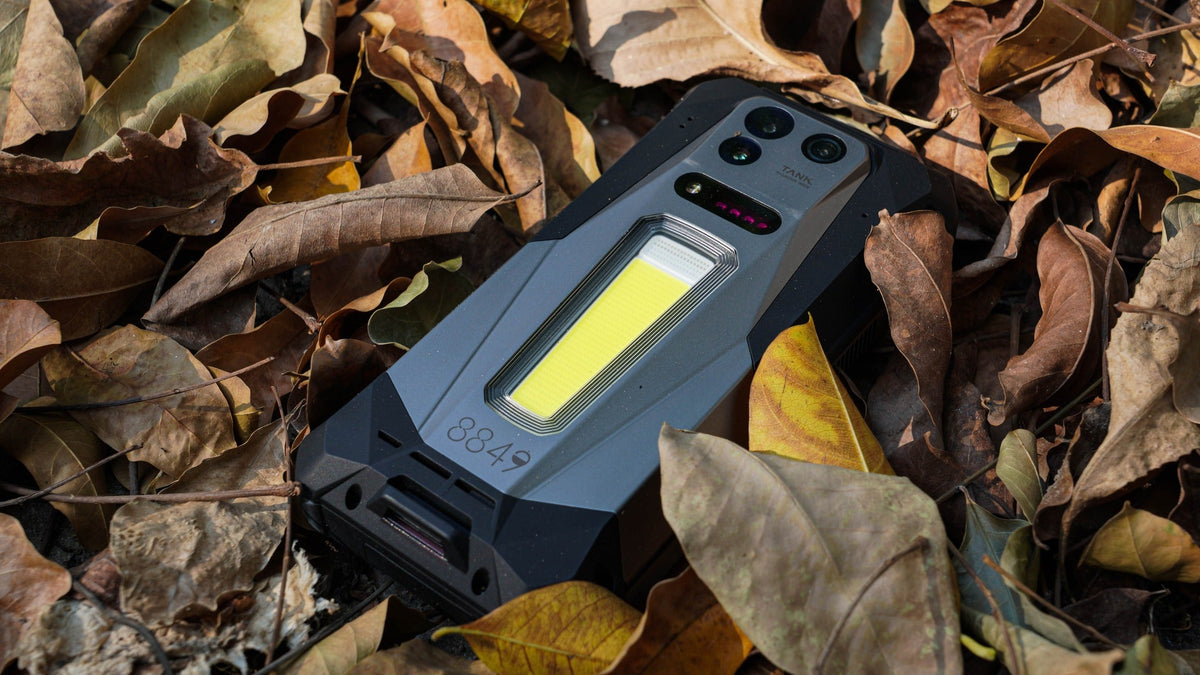
The 8849 Tank 5 is a flagship rugged smartphone built around a 6.73-inch 3K AMOLED display with 1440×3200 resolution, 120Hz refresh rate, and up to 3000 nits peak brightness. It is powered by the MediaTek Dimensity 9400e chipset, paired with 18GB of RAM and 512GB of storage, and carries a large 17,600mAh battery with 120W fast charging. Additional features include a 220-lumen 2K projector, a built-in laser rangefinder, a 50MP main camera system with night vision, IP68/IP69K protection, and eSIM support.

This combination makes the Tank 5 well-suited for users who need a bright, high-resolution screen that remains readable outdoors, along with practical tools for fieldwork, construction, surveying, and outdoor activities. The high-brightness AMOLED panel helps with visibility in direct sunlight, while the projector and rangefinder add utility for on-site briefings and quick measurements.
How to Improve Screen Visibility Outdoors
Even a bright rugged phone can become harder to read under direct sunlight. A few practical adjustments can help improve outdoor visibility in everyday use:
- Enable auto-brightness — Allow the phone to automatically adjust screen brightness based on ambient light conditions.
- Adjust the viewing angle — Tilt or rotate the phone to reduce reflections from the sky, windows, or nearby surfaces.
- Use an anti-reflective screen protector — Choose a quality protector designed to reduce glare while maintaining clarity.
- Keep the screen clean — Dust, fingerprints, and smudges can increase reflections and make the display harder to read.
- Optimize display settings — Increase text size or enable high-contrast and bold text options when needed.
These steps can noticeably improve everyday readability outdoors. However, they cannot fully compensate for a display that lacks sufficient brightness or effective reflection control in the first place.
Final Verdict
How bright does a rugged phone need to be? For most outdoor professionals, sustained brightness of 600 to 1,000 nits, paired with optical bonding and an anti-reflective coating, delivers a screen you can read comfortably in the sun. If your work is mostly indoors, 400 to 500 nits is perfectly adequate. And if you operate in low light, pay equal attention to how far the screen can dim.
The best approach is to match the display to your working conditions, verify the claims with independent measurements, and test the phone in the environment where you will actually use it. A rugged phone should be readable wherever you take it, and brightness is a big part of making that true.

Share:
What Are Heavy-Duty Phones? Definition, Benefits & Uses