

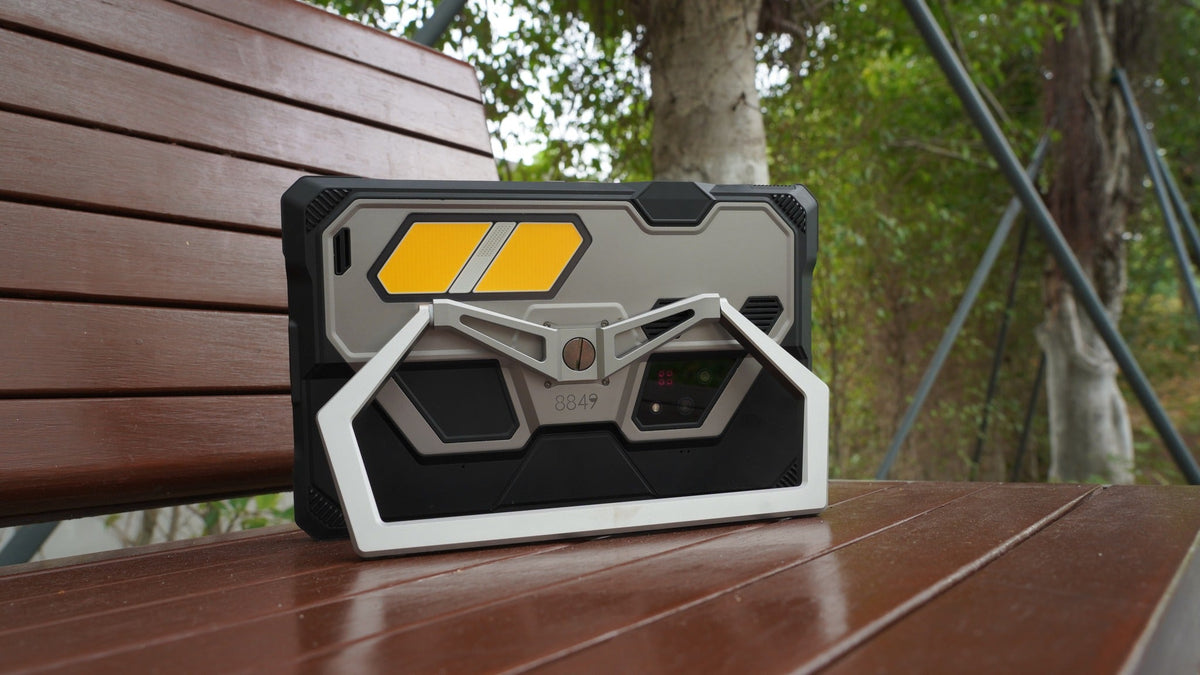
Rugged tablets are designed to handle demanding working environments where ordinary tablets may not be reliable enough. With durable construction, resistance to dust and water, and long-lasting batteries on some models, they help professionals access information and complete tasks in the field, on factory floors, and across other challenging workplaces.
From construction sites to warehouses, rugged tablets serve a wide range of industries. This article explores five of their most practical use cases and explains how they support everyday work.
What Are Rugged Tablets?
Rugged tablets are mobile devices designed to operate reliably in demanding environments where standard tablets may be more vulnerable to damage. They typically feature reinforced bodies, dust and water resistance, and protection against drops, vibration, and temperature changes. Depending on the model, they may also offer larger batteries, sunlight-readable displays, and specialized connectivity to support work in the field or industrial settings.
Unlike consumer tablets, rugged tablets prioritize durability and dependable operation over everyday entertainment and general use. For example, the 8849 Tank Pad Ultra combines a rugged design with a built-in projector, making it suitable for outdoor work and situations where portable presentations are useful. These capabilities allow rugged tablets to support a variety of professional tasks across different industries.
#1 Construction and Field Engineering
Construction sites are challenging environments for electronic devices. Dust, concrete debris, vibration, accidental drops, and unpredictable weather can all affect the reliability of ordinary tablets. Rugged tablets are designed to withstand these conditions, allowing construction workers and field engineers to access digital blueprints, review building plans, and check project specifications directly on-site without constantly returning to the office.
Rugged tablets also help teams improve communication and reduce paperwork. Engineers can document site inspections with photos, update progress reports, record measurements, and share changes with project managers in real time. When multiple teams work on the same project, having access to updated drawings and schedules helps reduce misunderstandings and avoid mistakes caused by outdated information. A large display also makes it easier to review technical drawings and detailed documents than using a smartphone.
For construction companies and engineering teams, choosing a rugged tablet can help keep essential information accessible throughout the workday. If your team regularly reviews plans outdoors or works in dusty, demanding conditions, consider a rugged tablet with strong drop protection, water and dust resistance, and a screen that remains readable in bright sunlight.
#2 Warehousing and Logistics
In warehouses and distribution centers, efficiency depends on accurate inventory records and smooth coordination between different operations. Rugged tablets allow workers to check stock levels, scan barcodes with compatible accessories, track shipments, and update order statuses directly from the warehouse floor. Instead of walking back to a workstation to enter information, employees can complete these tasks on the move, helping reduce delays and data-entry errors.
Durability is particularly important in busy logistics environments, where devices are frequently handled, moved between workstations, and exposed to dust or accidental impacts. A rugged tablet with a long-lasting battery can support extended shifts, while reliable Wi-Fi or cellular connectivity helps keep inventory systems synchronized as workers receive goods, pick orders, and prepare shipments. Depending on the workflow, a model with integrated barcode scanning or compatibility with external scanners can further simplify daily operations.
For warehouses and logistics teams looking to streamline inventory management, a rugged tablet can provide a practical way to bring essential data directly to the point of work. Choose a model with the connectivity, scanning capabilities, and battery life needed to support your team's daily operations.

#3 Manufacturing and Industrial Operations
In manufacturing facilities, rugged tablets help workers access important information without leaving the production floor. Technicians can use them to check equipment manuals, follow maintenance procedures, record inspection results, and report production issues directly from the machines they are working on. Quality control teams can also document defects and update inspection records digitally, making it easier to share findings with supervisors and maintenance staff. This reduces reliance on paper records and helps keep production information up to date.
Industrial environments can expose devices to dust, moisture, vibration, and accidental impacts, making durability an important consideration. Rugged tablets with reinforced housings and appropriate ingress protection can remain useful in these conditions, while reliable wireless connectivity allows workers to retrieve technical documents and update records as tasks are completed. In facilities where equipment is spread across large production areas, the ability to carry a tablet from one workstation to another also makes routine inspections and maintenance more convenient.
#4 Outdoor Fieldwork and Environmental Research
Outdoor fieldwork often takes professionals far from offices, reliable power sources, and stable working conditions. Surveyors, environmental researchers, utility workers, and field technicians use rugged tablets to collect measurements, record observations, access digital maps, and document conditions at remote locations. Instead of carrying paper forms or returning to an office to enter data, they can update records directly in the field, helping improve accuracy and keep information organized throughout a project.
Battery life is particularly important when fieldwork lasts an entire day or takes place in remote areas. A rugged tablet with a large-capacity battery can reduce the need for frequent charging, allowing workers to spend more time collecting data and less time worrying about power. Combined with a sunlight-readable display, GPS functionality, and protection against dust, rain, and accidental drops, the right rugged tablet can make outdoor work more practical and reliable, even in challenging environments.
#5 Public Safety and Emergency Response
In public safety and emergency response, having access to reliable information can make a significant difference in the field. Firefighters, rescue teams, and emergency personnel can use rugged tablets to check maps, review incident reports, coordinate team activities, and access essential instructions while responding to incidents. Their durable construction is useful in unpredictable environments where devices may be exposed to rain, dust, impacts, or rough handling. With a sufficiently large battery, a rugged tablet can also support extended operations when access to charging is limited.
Some specialized features can also be useful during emergency operations. A built-in camping light can provide additional illumination during nighttime work or power outages, while thermal imaging can help identify heat sources in certain low-visibility situations. Although rugged tablets do not currently offer thermal imaging in the 8849 product lineup, other 8849 devices, such as the Tank 5 Pro, include this feature for specialized field applications.
Conclusion
Rugged tablets serve a wide range of professional applications, from construction sites and manufacturing facilities to warehouses, remote fieldwork, and emergency response. Their durability, battery capacity, and specialized features help workers access important information and complete tasks in environments where reliability matters.
When choosing a rugged tablet, consider the conditions in which it will be used and the tasks it needs to support. The right device should balance durability, performance, battery life, and practical features to meet the demands of everyday work.
FAQs About Rugged Tablets
Are rugged tablets better than regular tablets for fieldwork?
Rugged tablets are often a better fit for fieldwork that involves dust, moisture, accidental drops, or extended periods outdoors. However, regular tablets remain suitable for many tasks in offices, homes, and less demanding environments. The best choice depends on working conditions, durability requirements, and budget.
What should you look for when choosing a rugged tablet?
Key factors include the IP rating, drop resistance, battery capacity, screen brightness, processing performance, connectivity, and compatibility with the software or accessories required for your work. Weight is another consideration, as rugged tablets typically need reinforced components and protective housings to withstand demanding conditions. A heavier design can be an inevitable trade-off for greater durability, so choose a model that balances protection with portability for your specific needs.

Share:
How Bright Should a Rugged Phone Be?