

You have seen the label on phone boxes and spec sheets. It sounds reassuring. It suggests toughness that ordinary devices cannot match. But what does it actually mean? A military-grade smartphone is not a phone issued to soldiers or tested in combat. It is a device whose manufacturer claims compliance with one or more durability test methods originally written for military equipment.
These tests simulate environmental stresses: heat, cold, shock, vibration, humidity, and dust ingress. The term itself is not regulated. Without a named standard behind it, the phrase means little.
This guide explains which certifications matter, how they apply to real work, and what you should look past when choosing a device that will spend its days in the field.
What Does Military-Grade Mean?
“Military-grade” is a common label on rugged smartphones that signals the device has been built to handle tough environments. In practice, it almost always refers to testing against MIL-STD-810, a U.S. Department of Defense document that outlines laboratory test procedures for environmental durability. These tests cover extremes such as:
- drops
- vibration
- dust
- extreme temperatures
- humidity
- altitude
- water exposure
Manufacturers typically test the phone against a selection of these procedures rather than every single one. As a result, a “military-grade” phone has proven it can survive specific harsh conditions in controlled lab settings, but it isn’t indestructible.
The label is best viewed as a useful starting point. Always check exactly which MIL-STD-810 tests were performed (and any additional certifications like IP ratings) to understand what level of ruggedness the phone actually offers.
The Standards Behind a Military-Grade Smartphone
Two rating systems define what a military-grade smartphone can withstand. Each covers a different category of stress, and neither replaces the other.
MIL-STD-810
MIL-STD-810 is a test method standard, not a pass-fail certification. Manufacturers choose which procedures to apply and disclose the results. The current revision, MIL-STD-810H, includes over two dozen test methods. For smartphones, the most commonly referenced are:
- Low-pressure (altitude) operation
- High-temperature storage and operation
- Low-temperature storage and operation
- Temperature shock
- Humidity exposure
- Vibration endurance
- Mechanical shock and transit drop
No single test validates a phone for all field conditions. A device may excel in drop resistance but has never been tested for salt fog or fungus. Always check which methods were specifically applied in the manufacturer’s documentation.
IP Ratings
The Ingress Protection (IP) system, defined under IEC 60529, measures resistance to solids and liquids. The first digit rates dust protection, the second rates water protection. IP68 means the phone is dust-tight and can withstand continuous immersion beyond one metre for a duration specified by the manufacturer.
IP69K adds protection against close-range, high-pressure, high-temperature water jets, a requirement in heavy wash-down environments. An IP rating alone says nothing about drop, vibration, or temperature tolerance. That gap is why the two systems are almost always used together.
How IP Ratings and Military Standards Work Together
Think of IP ratings as the shield against particles and moisture and MIL-STD-810H as the skeleton that absorbs shock, vibration, and thermal swings. A phone can carry an IP68 badge and still crack on its first drop onto concrete. Another can pass a 26-point drop test but fail under a high-pressure hose.
Field environments rarely present a single challenge. A surveyor on a rainy site faces water ingress and drop risk simultaneously. A construction foreman in a desert needs dust sealing and high-temperature tolerance at once. One system without the other leaves a gap.
| Protection Area | IP Rating Covers | MIL-STD-810H Covers |
|---|---|---|
| Dust and solid particles | Fully dust-tight (IP6X) | Blowing sand, dust ingress during vibration |
| Water exposure | Submersion (IPX8), high-pressure jets (IPX9K) | Humidity, rain, ice accretion |
| Mechanical shock | Not addressed | 26-point drop test, transit shock |
| Temperature extremes | Not addressed | Hot storage, cold operation, thermal cycling |
| Vibration | Not addressed | Vehicle-mounted vibration, loose-cargo bounce |
Who Needs a Military-Grade Smartphone?
The strongest ratings are wasted on a desk. The right question is not “Is this phone tough enough?” It is “Does my daily environment make a standard phone a liability?”
Field engineers, utility workers, surveyors, wildland firefighters, and logistics crews routinely expose their devices to mud, dust, vibration, and sudden impacts. In these roles, a device failure means lost data, downtime, or a safety risk. A military-grade smartphone that has been tested for the specific stresses of the job becomes a tool, not a gadget.
Weekend campers and outdoor enthusiasts benefit too, though they may not need every rating on the list. Match the standard to the real hazard. If you never face high-pressure spray, IP69K adds cost without value.
Practical Features of a Military-Grade Smartphone
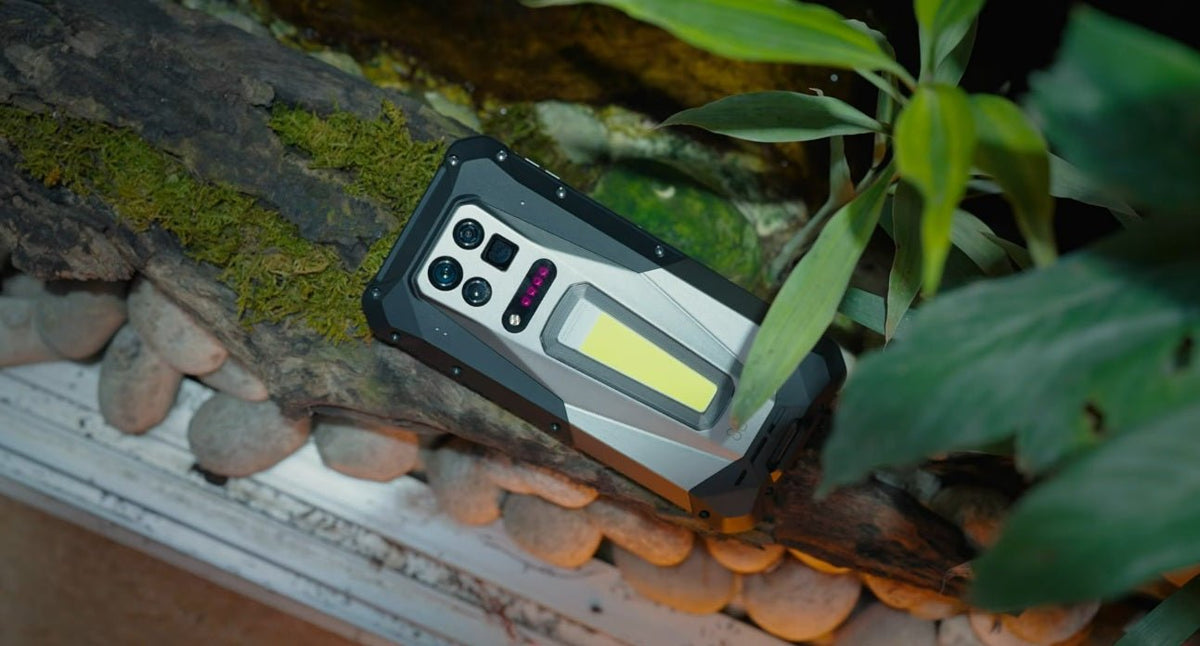
Certifications tell part of the story. The physical design and field-ready features determine whether the phone is usable when conditions turn rough. A rugged smartphone needs practical engineering, not just a thick case.
Battery Life
A tough phone with a dead battery is useless by noon. Devices in this category typically carry cells far larger than consumer flagships. Multi-day runtime between charges is common. Many also support reverse charging, letting the phone serve as a power bank for other equipment. In remote field work, this single feature can eliminate the need for a separate power source.
Display
A screen that works through rain and gloved fingers saves time and frustration. Look for a wet-touch and glove-mode display. Physical buttons should be large, textured, and spaced widely enough to operate by feel. A dedicated push-to-talk key or programmable shortcut button is a strong indicator that the device was designed for field use, not just wrapped in a thick case.
Other Features
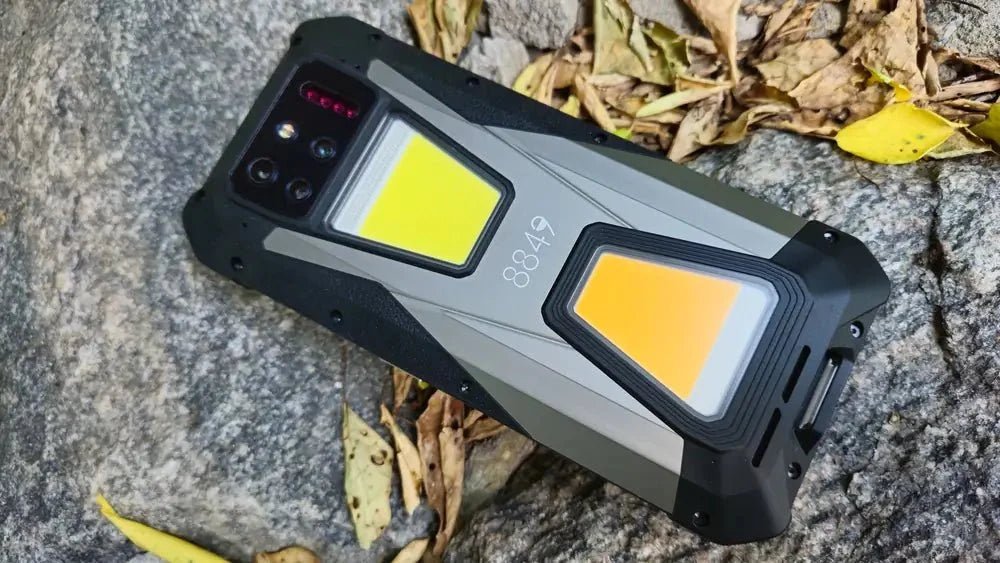
Additional practical indicators include loud front-facing speakers, bright flashlights, and sealed ports with gaskets you can inspect and replace. None of these features is a luxury add-on when the job site has no quiet room and no power outlet.
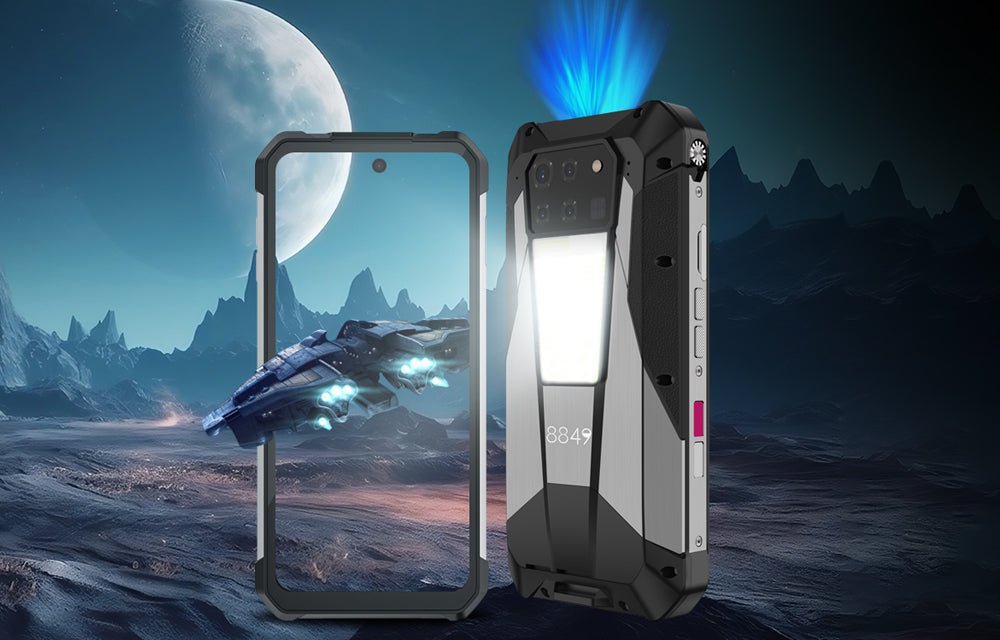
Some rugged phones pack unexpected tools that remove the need for extra gear. A built-in projector, night vision camera, for example, turns a device like the Tank X into an instant briefing tool on a jobsite or campsite wall.
Learn More: Choosing the Best Rugged Phone in 2026
Care and Limitations in the Field
Even the toughest phone has failure points. Every rating assumes factory integrity. Drop a sealed device once too often and the seal may shift. Open a port cover in a dusty wind and the dust-tight guarantee vanishes. Treat certifications as a buffer, not an impervious shield. Here are some tips for your phone:
- Inspect port covers and gaskets before any wet or dusty shift.
- After a hard drop, examine the frame, screw holes, and seams for hairline cracks.
- Rinse the phone with fresh water after exposure to salt, chemicals, or mud.
- Dry the charging port completely before connecting a cable.
- Replace any compromised seal or gasket immediately.
A military-grade smartphone rewards routine care. Neglect the basics and even the strongest housing will eventually yield.
Conclusion
A military-grade smartphone is not a single spec or a claim of indestructibility. It is a collection of test results tied to named standards, most commonly MIL-STD-810H and the IP rating system. Understanding what each standard covers and what it leaves out shifts the decision-making from impulse to deliberate evaluation.
For those who work in wet, dusty, shaky, or thermally extreme conditions, that clarity turns an expensive purchase into a reliable field tool. Check the specific test methods. Match them to your real environment. Maintain the device as if its ratings are a starting baseline, not a lifetime pass.
FAQs
Is military-grade good quality?
Yes, "military-grade” is generally a strong indicator of high build quality and durability. It means the phone has been tested to withstand demanding conditions such as drops, extreme temperatures, dust, vibration, and water exposure.
That said, the actual quality depends on which specific MIL-STD-810 tests were performed and how well the manufacturer executed the overall design. A properly built military-grade phone is an excellent choice if you work in harsh environments, outdoors, or need a device that can survive rough handling. It’s not a guarantee of being indestructible, but it’s significantly tougher than standard smartphones.
What is US military grade?
“US military grade” refers to equipment tested against standards set by the U.S. Department of Defense, most commonly MIL-STD-810. This is a series of laboratory test methods designed to evaluate how well devices endure environmental stresses like shock, vibration, altitude, temperature extremes, humidity, sand, dust, and moisture.
When a smartphone is described as US military grade, it means it has passed a selection of these MIL-STD-810 tests. It signals that the phone is built for reliability in tough, real-world conditions similar to those faced by military personnel. Many rugged phone brands use this standard to prove their devices are genuinely tough.
Deli:
How to Choose a Home Mini Projector?
AMOLED Display: What You Need to Know