


Most smartphone cameras stop being useful once the light disappears. Push them into a dark trail, an unlit job site, or a moonless backyard, and the result is usually a grainy, unusable shot. A night vision phone addresses this directly by integrating infrared illumination or enhanced low-light sensors into the camera system, so the phone can capture clear images in conditions a standard smartphone camera was never built to handle.
This isn’t a novelty feature. It’s the same underlying imaging technology used in dedicated night vision equipment, adapted and miniaturized to fit inside a phone. This guide explains how that technology actually works, the different approaches manufacturers use, and what genuinely matters when evaluating a night vision-capable phone camera.
What Is a Night Vision Phone?

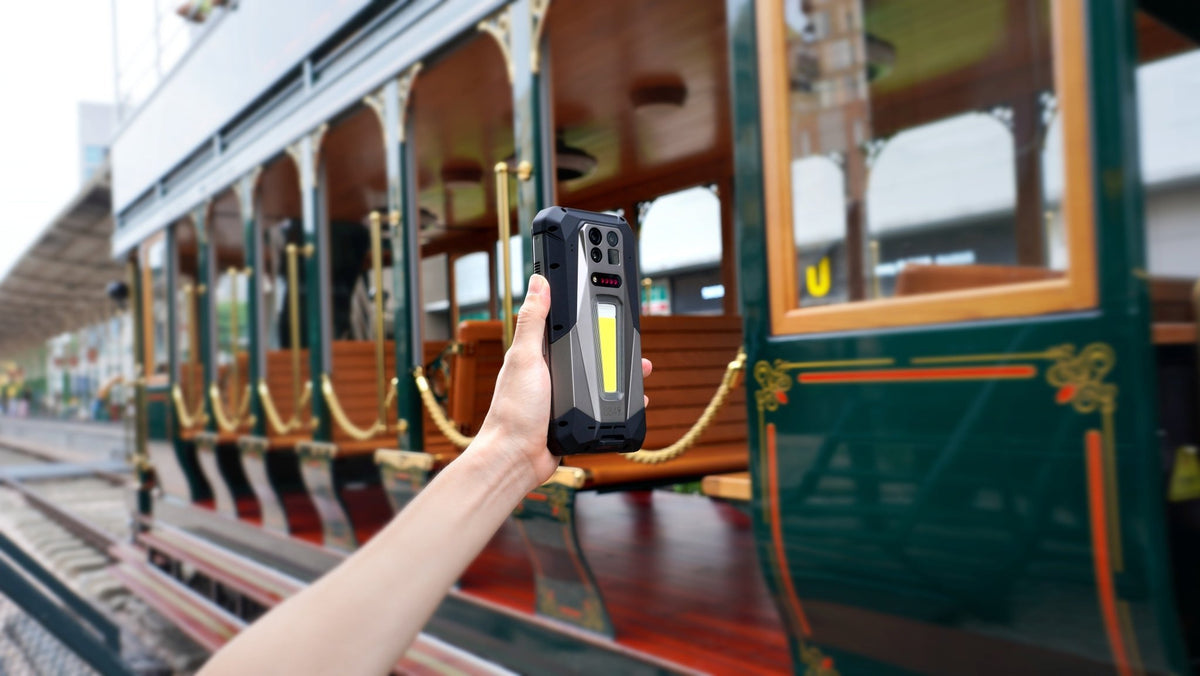
Image: Tank X vs Tank 4 Pro Night Vision
A night vision phone is a smartphone equipped with a camera system specifically designed to remain functional in low-light or fully dark conditions, typically through a combination of infrared LEDs and a dedicated low-light sensor. Unlike a phone’s standard camera, which depends entirely on available ambient light to form an image, a night vision-capable system actively compensates for the absence of light rather than simply amplifying what little is there.
In most implementations, this takes the form of a secondary camera module built specifically for infrared-assisted shooting, working alongside the phone’s primary camera. The feature has become most common on rugged smartphones, since the people who buy them are outdoor workers, technicians, campers, security and safety personnel who routinely operate in environments with little to no ambient lighting.
Night Vision Camera vs. a Standard Smartphone Camera
The core difference is purpose-built hardware. A standard phone camera sensor is optimized for daylight and typical indoor conditions. A dedicated night vision sensor, paired with infrared illumination, is engineered to remain usable at near-zero lux, a scenario ordinary smartphone cameras simply aren’t designed to handle well.
How Do Night Vision Camera Work?
The technology inside a night vision camera phone mirrors what’s used in dedicated night vision devices, scaled down to fit within a phone’s body.
Infrared Illumination
The most common approach is infrared illumination. Small infrared LEDs, positioned near the camera module, emit light that’s invisible to the human eye but fully detectable by a dedicated night vision sensor. As that infrared light reflects off nearby surfaces, the sensor captures it and renders a usable image, even in a completely dark space.
IR Cut Filters: Switching Between Day and Night
A supporting component, the IR cut filter, is what allows a single camera sensor to perform well in both daylight and darkness. During the day, this filter blocks infrared wavelengths so that colors render accurately. Once light drops, the filter shifts aside, allowing infrared to reach the sensor and enabling night vision mode. This is what lets a camera transition automatically rather than requiring the user to switch modes manually.
Low-Light Sensor Amplification
Beyond infrared, the phone’s main camera sensor also plays a role in low-light performance. Larger sensors with strong pixel-binning technology capture more available light per pixel, which improves image brightness and clarity in dim conditions even before infrared illumination is factored in. This is a separate mechanism from infrared-based night vision, but the two often work together in phones designed for outdoor and low-light use.
Thermal Imaging: A Related but Distinct Technology
It’s worth drawing a clear line here, since the two are often confused. Thermal imaging detects heat signatures rather than reflected infrared light, and it can function in absolute darkness or through smoke and fog because it doesn’t rely on any light source at all. This is a fundamentally different and typically more expensive technology than the infrared-based night vision found on most rugged phones. Most consumer devices use IR-based systems rather than true thermal sensors, and it’s a meaningful distinction to understand before assuming a phone offers thermal capability it doesn’t actually have.
Understanding IR Range in a Night Vision Camera
IR range refers to how far a phone’s infrared illumination effectively reaches before image quality begins to degrade. It’s one of the more practical specifications to check, since it directly determines how useful the feature actually is in real conditions.
Effective range varies significantly by device and depends on the number and strength of the infrared LEDs used. As a general benchmark, night vision ranges in the 10–15 meter range are considered solid performance for a phone-based system useful for scanning a yard, a section of trail, or the interior of a dark room, though not comparable to dedicated long-range night vision equipment.
Why IR Range Matters for Practical Use
A shorter range works fine for close-up tasks, like checking a room or a few feet of a path ahead. For scanning a wider area, a campsite perimeter, a parking area, or an open field a longer effective range reduces blind spots and gives a more complete picture of the scene.
Types of Night Vision Technology Found in Phones
Not every “night vision” phone camera works the same way. Broadly, the underlying technology falls into a few categories.
IR-Assisted Night Vision
The most common type of rugged phones. A dedicated sensor paired with infrared LEDs produces usable, typically monochrome or low-saturation footage in total darkness.
Low-Light Enhanced Main Cameras
Some phones rely less on infrared and more on a larger main sensor with advanced image processing to amplify whatever ambient light is present. This approach can still meaningfully improve low-light photography, even without dedicated infrared hardware.
Thermal Imaging
As covered above, thermal sensors detect heat rather than reflected light. This remains a less common and generally costlier inclusion in consumer smartphones, more often found in specialized industrial, military, or professional-grade equipment.
Key Factors for Choosing a Night Vision Phone
Understanding the underlying technology makes it much easier to evaluate a device on its actual merits rather than marketing language alone. A few specifications matter more than the rest.
Resolution and Sensor Quality
A higher-resolution dedicated night vision sensor generally produces sharper, more usable detail than a lower-resolution alternative. Autofocus support on the night vision lens also meaningfully improves image sharpness at varying distances, rather than relying on a fixed focal point.
Number and Strength of Infrared LEDs
More infrared LEDs generally provide stronger, more even illumination across the frame, reducing dark corners or uneven exposure in the resulting image. This is a useful spec to compare across devices, since it directly affects both image quality and effective range.
Battery Life for Extended Outdoor Use
Night vision shooting, combined with GPS and general outdoor use, draws noticeably more power than typical daytime smartphone use. A device intended for extended fieldwork benefits from meaningfully larger battery capacity than a standard smartphone, particularly for users who may be away from a charger for extended periods.
Durability and Weatherproofing
A night vision phone is only as useful as its ability to survive the environments it’s built for. An IP68 or higher ingress protection rating is a reasonable minimum for anyone planning regular outdoor use, protecting against dust, water exposure, and general field conditions.
Benefits of a Night Vision Phone
Having night vision integrated directly into a phone, rather than carried as a separate device, offers a few clear practical advantages:
- Consolidated equipment: No need to carry a dedicated night vision unit alongside a phone
- Better fieldwork documentation: Usable footage during inspections, job sites, or after-dark work
- Improved outdoor situational awareness: Identifying obstacles, wildlife, or hazards on night hikes or in unlit areas
- Everyday practical use cases: Checking a dark yard, locating a pet at night, or navigating an unlit path
- No additional equipment cost: The capability is built into a device many people already carry
Best Uses of a Night Vision Phone
This feature tends to earn its keep in a specific set of situations rather than everyday photography. It’s most practically useful for:
- Wildlife observation: spotting nocturnal animals without disturbing them with visible light
- Camping: checking the surrounding campsite or tent area after dark
- Security patrol: scanning unlit areas during rounds without carrying separate equipment
- Construction inspection: documenting site conditions in low-light or unlit interior spaces
- Hunting (where legal): locating game or navigating terrain before dawn or after dusk
- Night hiking: identifying obstacles, wildlife, or trail markers on unlit paths
- Farm monitoring: checking on livestock, equipment, or property boundaries at night
Limitations of Night Vision Phones
To use this feature effectively and set realistic expectations, it helps to understand where it falls short compared to dedicated night vision equipment:
- Limited range: phone-based systems don’t match the range of dedicated, purpose-built IR cameras
- Black-and-white output: most infrared footage lacks color, since IR light doesn’t carry color information
- Battery drain: active infrared LEDs consume noticeably more power than standard camera use
- Reduced effectiveness through glass: infrared light scatters and reflects off glass surfaces, degrading image quality
- Doesn’t work in bright sunlight: IR mode is typically disabled in daylight, since the IR cut filter blocks infrared wavelengths when ambient light is already sufficient
Conclusion
A night vision phone brings genuine, field-tested imaging technology, infrared illumination, IR cut filters, and enhanced low-light sensors into a single device built for real outdoor use. The most reliable way to evaluate one isn’t marketing language, but the specifics: infrared LED count, sensor resolution, effective IR range, and durability rating all indicate how capable a phone’s night vision system actually is.
Frequently Asked Questions
Can a night vision phone work in complete darkness?
Yes, provided the phone includes dedicated infrared LEDs and a night vision-capable sensor, these systems are specifically designed to remain usable with zero ambient light present.
Is night vision on a phone the same as thermal imaging?
No. Most rugged phone night vision systems use infrared illumination reflected IR light rather than thermal imaging, which detects heat instead. True thermal sensors are less common and typically reserved for more specialized, higher-cost devices.
Do night vision phones record in color?
Generally no. IR-based night vision typically renders in monochrome or low-saturation footage, since infrared light doesn’t carry color information the way visible light does.
What is a good night vision range to look for in a phone?
Effective ranges vary by device, but 10–15 meters is a reasonable benchmark for practical outdoor use, such as yard monitoring or scanning a nearby trail after dark.

Deli:
How to Choose the Right Phone Screen Size?
What Is Fast Charging: A Complete Guide