

Smartphone displays have evolved rapidly over the past decade, and terms like OLED and AMOLED are now everywhere in the mobile industry. From flagship phones and foldable devices to smartwatches and tablets, these display technologies are often promoted as premium features because of their vibrant colors, deep blacks, and impressive contrast.
However, many people still find it difficult to understand what actually separates an AMOLED display from an OLED display, especially since the two terms are frequently used interchangeably.
In reality, AMOLED and OLED are closely related, but they are not exactly the same technology. The differences affect factors such as image quality, power efficiency, refresh performance, and even the overall smartphone experience.
In this guide, we’ll explain what OLED and AMOLED displays are, how they work, and what their real-world differences mean when choosing a phone or other electronic device.
What Is an OLED Display?
OLED stands for Organic Light-Emitting Diode, a display technology that uses organic compounds to produce light when electricity passes through them.
Unlike traditional LCD screens, OLED displays do not require a separate backlight. Instead, each individual pixel can turn on and off independently, allowing the display to control brightness and color at a much more precise level. This self-emissive design is one of the biggest reasons OLED technology became popular in premium electronic devices.
Today, OLED displays are widely used across different types of electronics. In smartphones, they are commonly found in mid-range and flagship models because of their premium image quality and power efficiency.
OLED panels are also heavily used in TVs, smartwatches, tablets, laptops, and even some automotive displays, especially in products that prioritize vibrant visuals and modern screen design.
What Is an AMOLED Display?
AMOLED stands for Active Matrix Organic Light-Emitting Diode. It is a type of OLED display that uses an active matrix backplane to control each pixel individually. The “Active Matrix” layer consists of thin-film transistors (TFTs) and capacitors placed behind the OLED panel, allowing the screen to manage pixels more quickly and accurately.
Compared to simpler passive-matrix OLED technologies, AMOLED displays can handle higher resolutions, faster refresh rates, and smoother performance, which makes them especially suitable for modern smartphones and other advanced portable devices.
Because AMOLED is built on OLED technology, it shares many of the same advantages, including self-lit pixels, deep blacks, and high contrast ratios. However, the active matrix structure improves how the display updates and controls each pixel in real time. This helps AMOLED panels deliver better responsiveness and more efficient performance during demanding tasks such as gaming, video playback, and multitasking on high-resolution screens.
AMOLED displays became extremely popular in smartphones because they combine strong visual quality with practical mobile advantages. Their fast response speed, energy efficiency, thin construction, and support for modern features such as high refresh rates and always-on displays make them ideal for portable electronics.
As smartphone manufacturers continue focusing on immersive screens and premium designs, AMOLED technology has become one of the most common display choices in today’s mobile market.
AMOLED vs OLED: What’s the Difference?
AMOLED is not a completely separate display technology from OLED; it is actually a more advanced implementation of OLED. In simple terms, all AMOLED displays are OLED, but not all OLED displays are AMOLED. The key difference lies in how each pixel is controlled and how the display is driven, which results in variations in performance, efficiency, and overall user experience.

Pixel control method
The main technical difference between OLED and AMOLED lies in pixel control. Standard OLED displays may use simpler control methods depending on the implementation, while AMOLED uses an active matrix system with thin-film transistors (TFTs) to manage each pixel individually. This allows AMOLED panels to update pixels more precisely and quickly, especially in high-resolution and fast-moving content.
Refresh performance
AMOLED displays generally deliver better refresh performance compared to basic OLED implementations. The active matrix layer enables faster pixel switching, which translates into smoother animations, reduced motion blur, and improved responsiveness. This is particularly noticeable in gaming, fast scrolling, and high refresh rate screens commonly found in modern smartphones.
Power consumption
Both OLED and AMOLED are energy-efficient compared to LCD, but their power usage can differ depending on usage patterns. OLED panels consume less power when displaying darker content because black pixels are turned off.
AMOLED improves efficiency further in mobile devices by optimizing pixel control, especially when dark mode or dark-themed interfaces are used extensively.
Color saturation
AMOLED displays are often tuned to produce more vivid and saturated colors compared to standard OLED panels. This makes images and videos appear more vibrant and visually striking.
While OLED can be more natural and accurate in color reproduction, AMOLED is frequently optimized for a more dynamic and eye-catching visual experience, especially in consumer smartphones.
Brightness
Brightness levels can vary depending on the specific panel generation and manufacturer tuning, rather than OLED vs AMOLED alone. However, AMOLED displays in smartphones are often engineered to achieve higher peak brightness, which improves outdoor visibility. OLED displays in TVs, on the other hand, may prioritize consistent brightness and color accuracy over extreme peak brightness.
Manufacturing complexity
From a production perspective, AMOLED displays are more complex to manufacture due to the active matrix layer and additional thin-film transistor structure. This increases production cost and technical requirements. OLED panels without advanced active matrix optimization can be simpler and slightly cheaper, which is why OLED variations are still widely used in certain applications like televisions and monitors.
Side-by-side comparison
To make the differences clearer, here is a direct comparison of the key aspects between OLED and AMOLED technologies:
| Feature | OLED | AMOLED |
|---|---|---|
| Technology Type | Organic light-emitting diodes | OLED with active matrix control |
| Pixel Control | Simpler driving methods | Individual pixel control via TFTs |
| Refresh Performance | Good | Better, smoother in fast motion |
| Power Efficiency | Efficient | More optimized for mobile usage |
| Color Output | More natural | More vivid and saturated |
| Brightness | Varies by panel type | Often higher peak brightness in phones |
| Manufacturing | Simpler | More complex and costly |
In summary, OLED defines the core display principle, while AMOLED enhances it with a more advanced control system designed to improve speed, efficiency, and overall mobile performance.
Which Display Looks Better on a Smartphone?
In real-world smartphone usage, both OLED and AMOLED displays deliver excellent visual quality, and the difference is often more subtle than many marketing claims suggest. OLED panels are typically praised for their more natural color reproduction and balanced tone, which can feel closer to real-life visuals.
AMOLED displays, on the other hand, are often tuned to appear more vibrant and punchy, making photos, videos, and UI elements look more dynamic and engaging. Neither approach is objectively “better”; it largely depends on whether the user prefers accuracy or visual impact.
When it comes to specific viewing experiences, factors such as brightness, HDR performance, and refresh rate optimization play a major role. AMOLED displays are commonly found in modern smartphones with high refresh rates, offering smoother scrolling and gaming experiences.
Outdoor visibility also tends to be strong on well-optimized AMOLED panels due to higher peak brightness levels. However, overall performance is not determined by the label alone, but by how each manufacturer calibrates and integrates the display into the device.
Are AMOLED Displays Better Than OLED Displays?
In practical terms, AMOLED is not universally “better” than OLED, because it is technically a subtype of OLED rather than a competing technology. What many users experience as an improvement comes from how AMOLED panels are implemented in modern smartphones, where manufacturers optimize color tuning, refresh rates, and power management for mobile use. This means AMOLED often feels more advanced in daily usage, but that does not automatically make it superior in every scenario.
Whether AMOLED is better really depends on what the device is designed for and how the display is calibrated. Some OLED implementations, especially in TVs, prioritize color accuracy and cinematic realism, while AMOLED panels in phones often emphasize vibrancy, responsiveness, and energy efficiency. In other words, AMOLED is typically better optimized for smartphones, but OLED as a broader category still includes a wide range of high-quality displays with different strengths.
How to Choose Between AMOLED and OLED Devices?
Since AMOLED is a refined form of OLED commonly used in smartphones, while OLED also appears in TVs, monitors, and other devices, the right choice often depends on how and where the display will be used. Understanding your viewing habits, performance expectations, and budget will help you make a more informed decision.

When to Choose AMOLED:
- Mobile gamers: Prefer smoother animations, faster response, and high refresh rate support
- Content consumers (videos & social media): Enjoy vivid colors and high contrast visuals
- Outdoor phone users: Benefit from higher brightness and better sunlight visibility on many AMOLED smartphones
- Battery-conscious users: Gain efficiency advantages when using dark mode or dark-themed apps
- Users who prefer modern smartphone features: Such as always-on display, curved screens, or foldable devices
When to Choose OLED:
- TV and home theater users: Prefer more natural color reproduction and cinematic accuracy
- Professional content creators: Need more balanced and realistic color representation for editing work
- Budget-conscious buyers (depending on device category): May find OLED options in certain devices more cost-effective
- Users prioritizing color accuracy over vibrancy: Ideal for viewing content as close to real-life tones as possible
- Non-mobile device users: Suitable for monitors, laptops, and TVs where AMOLED is less commonly used or necessary
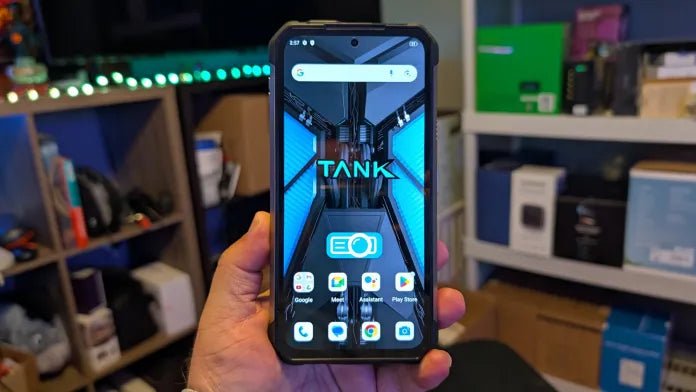
For users seeking a truly tough smartphone with a premium display, 8849 rugged phones are an excellent option. Models like the Tank 4 Pro feature a vibrant AMOLED display, combining the superior color depth and contrast of AMOLED technology with military-grade durability, making them ideal for outdoor professionals and extreme environments.
Conclusion
Both AMOLED and OLED displays deliver excellent visual performance, and in most real-world scenarios, the difference between them is more about design intent and optimization.
AMOLED, being an advanced form of OLED widely used in smartphones, is typically tuned for higher brightness, richer colors, and smoother performance in mobile environments.
OLED, as a broader category, spans a wider range of applications and can prioritize color accuracy and consistency, especially in larger screens like TVs. Ultimately, the best choice depends on how and where the display is used, rather than relying solely on the label.
FAQs
Do AMOLED screens burn in easily?
AMOLED screens can experience burn-in because they use self-emissive pixels, which may degrade unevenly if static images are displayed for long periods. However, modern smartphones include software optimizations such as pixel shifting, brightness management, and UI design strategies to reduce this risk in everyday use significantly.
Which display saves more battery, AMOLED or OLED?
Both OLED and AMOLED are energy-efficient compared to LCD because they can turn off individual pixels. In practice, AMOLED screens in smartphones are often better optimized for battery savings, especially when using dark mode or darker interfaces, since black pixels consume almost no power.
Is AMOLED display better for your eyes?
AMOLED displays are not inherently “better” for eye health, but they can feel more comfortable in low-light environments due to deep blacks and reduced glare. However, factors like brightness level, blue light settings, and screen usage habits have a much greater impact on eye comfort than the display type itself.

Share:
AMOLED Display: What You Need to Know
AMOLED vs LCD Display: Which Is Better?