

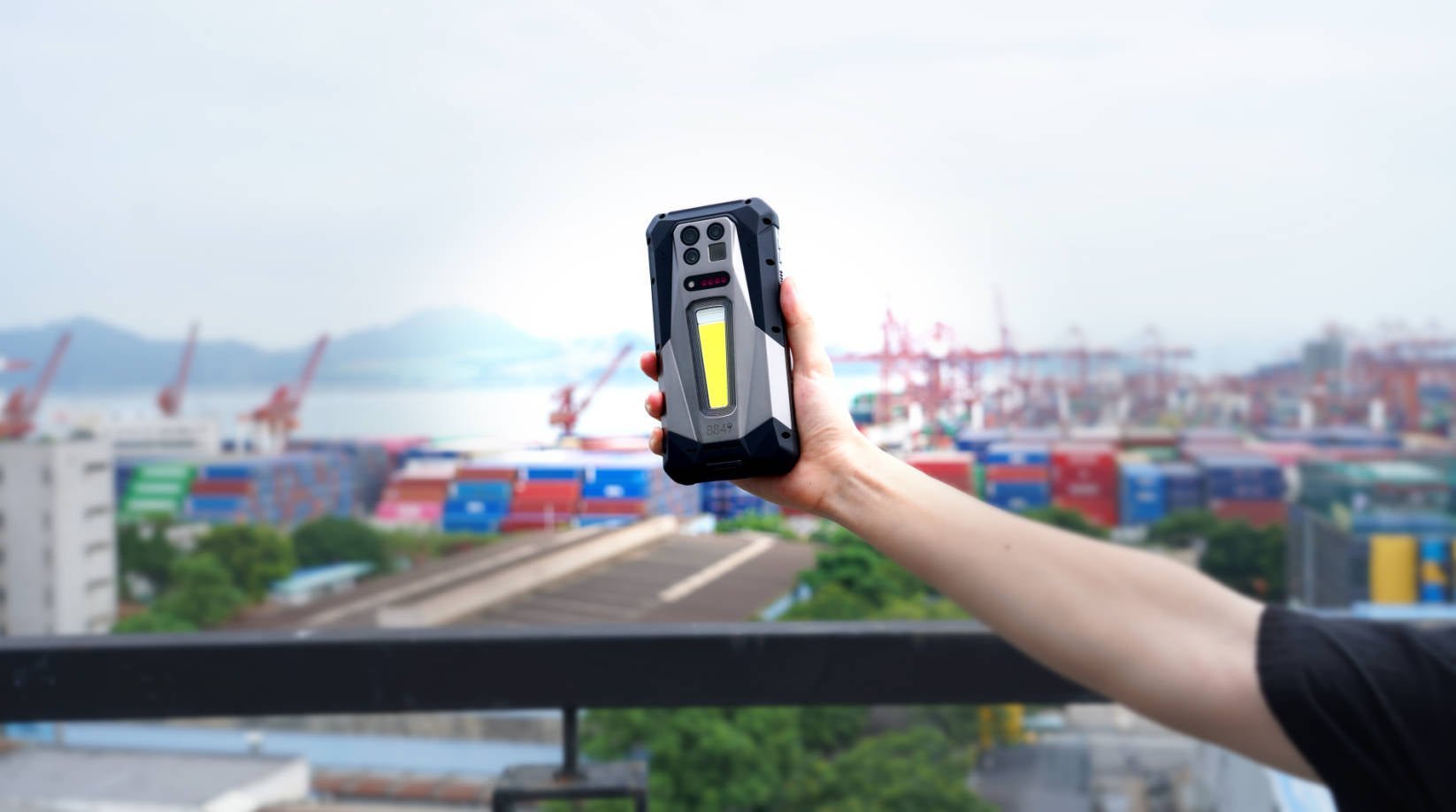
Thermal imaging and night vision are both designed to help you see in dark or challenging environments, but they work in very different ways. That is why the two technologies are often confused, especially when they appear as features on outdoor equipment, cameras, or rugged phones. In simple terms, night vision enhances available light to produce a more recognizable view of the surroundings, while thermal imaging detects infrared radiation emitted by objects and turns differences in heat into an image.
The difference becomes more important when you consider how and where you plan to use them. Night vision can be useful when you need to see objects, terrain, and details in low-light conditions, while thermal imaging can reveal warm people, animals, vehicles, or equipment even when visible light is extremely limited. Understanding how each technology works, what each one can detect, and where its strengths lie can help you choose the right option for your needs.
What's the Difference Between Thermal Imaging and Night Vision?

Although thermal imaging and night vision can both help you see in dark environments, they provide very different types of visual information. The easiest way to understand the difference is to look at what each technology detects and how it creates an image. The table below gives you a quick overview before we take a closer look at how they work.
| Feature | Thermal Imaging | Night Vision |
|---|---|---|
| What it detects | Infrared radiation and heat differences | Available visible and near-infrared light |
| Requires visible light? | No | Usually requires some ambient light or IR illumination |
| Works in complete darkness? | Yes | Depends on the system |
| Detects heat differences? | Yes | No |
| Performance in smoke or fog | Generally better in some conditions | Can be more affected by atmospheric conditions |
| Image appearance | Heat-based image, often using colors or grayscale | More recognizable, scene-like image |
| Main strength | Detecting heat signatures | Seeing objects and details in low light |
How Does Thermal Imaging Work?
Thermal imaging works by detecting infrared radiation, or heat energy, emitted by objects and converting differences in that energy into a visible image. Unlike a conventional camera, it does not need visible light to form an image, which allows it to remain useful in darkness and other low-visibility situations.
Detecting Infrared Radiation
Everything with a temperature above absolute zero emits infrared radiation, although the amount varies with its temperature and other properties. A thermal imaging sensor detects this infrared energy and measures the differences between objects or areas in its field of view. Warmer objects generally produce stronger infrared signals, allowing the sensor to distinguish them from cooler surroundings.
Turning Heat Into an Image
The sensor's measurements are processed and translated into an image that people can see. Different temperatures can be represented using different shades or colors, making temperature differences easier to recognize. Common thermal palettes include white-hot, black-hot, and various color palettes, each of which can emphasize different details in a scene.
What Can Thermal Imaging Reveal?
Because thermal imaging focuses on heat rather than visible light, it can reveal things that a standard camera may struggle to capture in darkness. Common examples include:
- People and animals: Their body heat can make them stand out against cooler surroundings.
- Hot machinery and components: Unusual heat patterns can help identify overheating equipment or potential problems.
- Vehicles: Recently used vehicles can remain noticeably warmer than their surroundings.
- Heat loss: Thermal imaging can reveal areas where heat is escaping from buildings, pipes, or other structures.
- Temperature differences: Even when two objects look similar to the naked eye, differences in their thermal signatures may make them easy to distinguish.
How Does Night Vision Work?
Night vision works by making the most of the light available in a dark environment. Instead of detecting heat, a night vision system captures small amounts of visible or near-infrared light and processes them into a brighter image. Depending on the technology used, it may rely on ambient light such as moonlight and starlight or use an infrared illuminator to improve visibility when the surroundings are extremely dark.
Amplifying Available Light
Traditional night vision systems use specialized image intensifier technology to collect limited amounts of ambient light and amplify the signal. The intensified image is then converted into a visible display, allowing objects and surroundings to appear much brighter than they would to the naked eye. This means night vision generally works best when at least some light is available.
Infrared Illuminators and Digital Night Vision
When there is very little ambient light, some night vision systems use infrared illumination to light up the scene without relying on visible light. Digital night vision, meanwhile, uses an image sensor and electronic processing to capture and enhance available light, sometimes combined with an infrared illuminator. These approaches can produce a clearer view in dark conditions, although they still focus on reflected light rather than the heat emitted by objects.
What Can Night Vision Reveal?
Because night vision produces a more conventional view of the scene, it can be useful when you need to recognize objects and understand your surroundings in low-light conditions. Common examples include:
- People and animals: Night vision can help you see their shape, movement, and surrounding details when there is enough available light.
- Terrain and surroundings: Paths, buildings, vegetation, and other features can remain recognizable in dark environments.
- Objects and equipment: A brighter image can make it easier to distinguish the appearance and position of objects.
- Movement: Night vision can provide a clearer visual representation of moving people, animals, or vehicles.
- Low-light navigation: Seeing a more familiar representation of the environment can make night vision useful for outdoor activities and nighttime observation.
Thermal Imaging vs. Night Vision: Key Differences
The biggest difference between thermal imaging and night vision is the type of information they use to create an image. Thermal imaging detects heat, while night vision relies on available or infrared light. This fundamental difference affects how they perform in darkness, how much visual detail they provide, and which situations they are best suited for.
Performance in Complete Darkness
Thermal imaging has a clear advantage in complete darkness because it does not depend on visible light. As long as there are differences in thermal radiation between objects and their surroundings, a thermal camera can produce an image. Night vision, on the other hand, typically needs some ambient light or an infrared illuminator to see clearly, depending on the system.
Image Detail and Recognition
Night vision generally provides a more familiar, scene-like image, making it easier to recognize the shape, appearance, and details of objects. Thermal imaging instead highlights differences in heat, so a person or animal may stand out clearly without revealing as much visual detail about their clothing, appearance, or surroundings.
Detection vs. Identification
Thermal imaging is particularly strong at detection because a warm object can stand out against a cooler background even when it is difficult to see with the naked eye. Night vision is often better for identification, since its more recognizable images provide visual details that can help you determine exactly what you are looking at. In simple terms, thermal imaging can help you find something, while night vision can help you understand what it is.
Smoke, Fog, and Other Obstructions
Thermal imaging can sometimes maintain better visibility than night vision in smoke, light fog, or similar conditions because it detects infrared radiation rather than relying on reflected visible light. However, thermal imaging cannot simply see through every type of obstruction, and dense smoke, heavy fog, rain, or other environmental factors can still reduce its performance.
Daytime Performance
Thermal imaging can be used during both day and night because it detects heat rather than depending on darkness. Night vision is primarily designed for low-light environments, and using it during bright daylight may require additional protection or a system specifically designed to handle daytime conditions. This makes thermal imaging more versatile when the same device needs to work across different lighting conditions.
Thermal Imaging and Night Vision in Smartphones
Thermal imaging and night vision are no longer limited to dedicated cameras and specialized equipment. Both technologies can also be integrated into smartphones, particularly rugged phones designed for outdoor work and demanding environments. However, having one feature does not mean a phone has the other. A thermal imaging camera detects heat differences, while a night vision camera is designed to produce a clearer image in low-light conditions, so they serve different purposes.
A smartphone with thermal imaging can be useful for detecting heat sources, checking equipment for unusual temperature patterns, locating people or animals in darkness, and handling other situations where heat information is more valuable than ordinary visual detail.
Night vision, by comparison, is more suitable when you need to see the surrounding scene, objects, and terrain more clearly in low-light conditions. For users who frequently work or spend time outdoors at night, understanding this distinction can help them choose a phone with the right imaging capability.
8849 Tank 5 Pro and Thermal Imaging

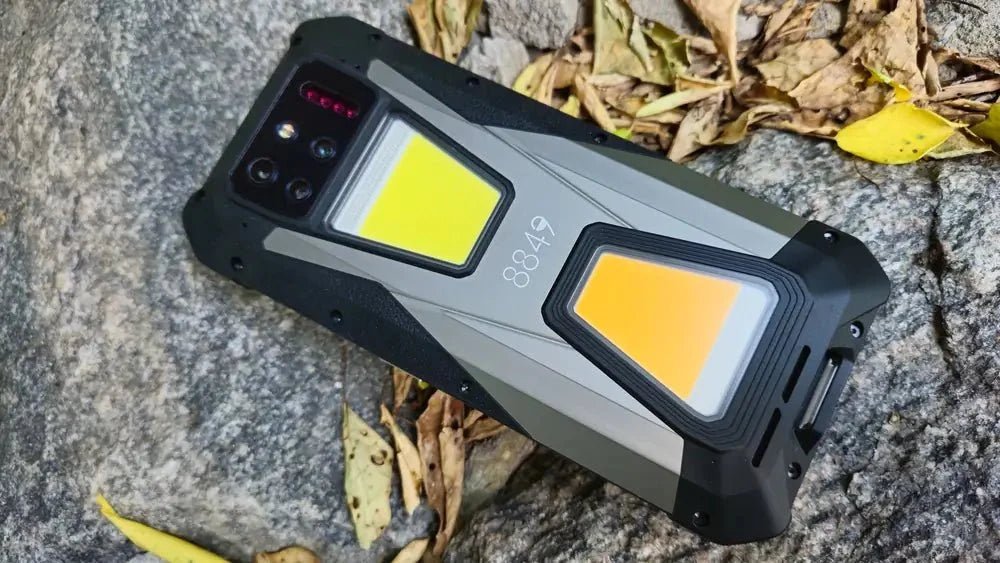
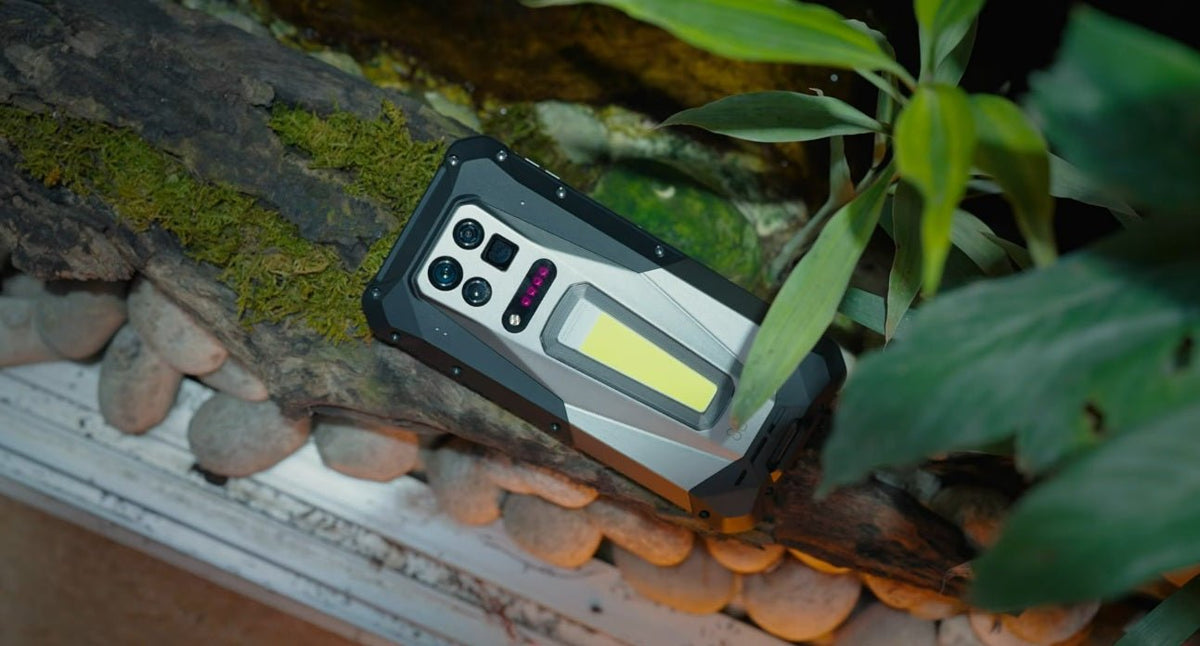
The 8849 Tank 5 Pro brings both thermal imaging and night vision into one rugged smartphone, making it especially versatile for outdoor work, inspection, and low-light situations. Its FLIR Lepton 3.1R thermal camera combines a 95° ultra-wide field of view with 160×120 resolution and <50 mK thermal sensitivity, while the dedicated 50MP night vision camera uses four 940nm IR LEDs for visibility in complete darkness.
Key features:
- 95° Ultra-Wide Thermal Imaging: FLIR Lepton 3.1R sensor with 160×120 resolution and <50 mK thermal sensitivity.
- 50MP Night Vision Camera: Dedicated night vision camera with four 940nm IR LEDs and up to 15m of night vision range.
- 220-Lumen 2K Projector: 2048×1080 resolution, laser autofocus, ±45° keystone correction, and 4m rangefinder functionality.
- 3K AMOLED Display: 6.73-inch AMOLED screen with 1440×3200 resolution, 120Hz refresh rate, and up to 3000 nits peak brightness.
- 17,600mAh Battery: Large dual-cell battery with 120W fast charging and a claimed full charge time of about 1.5 hours.
Final Thoughts and FAQs
Thermal imaging and night vision may both help you see in the dark, but they solve different problems. Thermal imaging detects heat and is particularly useful for spotting people, animals, and heat sources in complete darkness, while night vision uses available or infrared light to provide a more recognizable view of the surrounding environment.
Understanding this difference makes it easier to see why neither technology is simply better than the other. As rugged smartphones continue to incorporate more specialized imaging features, devices such as the 8849 Tank 5 Pro show how thermal imaging and night vision can be brought together in a single phone for greater versatility.
FAQs
1. Can thermal imaging see in complete darkness?
Yes. Thermal imaging does not rely on visible light, so it can produce an image in complete darkness as long as there are detectable differences in infrared radiation between objects and their surroundings.
2. Can night vision detect heat?
No. Night vision is designed to capture and enhance available or infrared light, not measure the heat emitted by objects. An object may be clearly visible through night vision without revealing its temperature or thermal signature.
3. Can thermal imaging see through walls?
No. Thermal imaging cannot see through solid walls. It detects infrared radiation from surfaces, so it may reveal temperature differences on the surface of a wall, but it cannot directly show people or objects on the other side.
4. Which is better for hunting, thermal imaging or night vision?
It depends on the purpose. Thermal imaging is generally better for detecting animals in darkness because their body heat can stand out against the surrounding environment. Night vision can be more useful when you need to see recognizable details of the animal and its surroundings.
5. Can a phone have both thermal imaging and night vision?
Yes. A smartphone can incorporate both technologies as separate imaging systems, allowing users to switch between thermal detection and low-light visual imaging depending on the situation. The 8849 Tank 5 Pro is an example of a rugged phone designed to offer both thermal imaging and night vision capabilities in one device.
Share:
What Is Thermal Imaging? A Complete Guide
8849 Tank 5 Pro: A Thermal Camera Changes Everything