
If you like watching movies on a big screen away from home, you've probably asked yourself this: should you buy a phone with a built-in projector, or keep your regular phone and add a small projector to your bag? Both get a big picture onto a wall. They get there in quite different ways, and the right choice depends on how you travel, work, and relax.
This article compares projector phones and small projectors on the points that matter in daily use, so you can decide without wading through spec sheets.
What Is a Projector Phone?
A projector phone is a smartphone with a projection module built into its body, usually on the back or the top edge. Open the projector function, point the phone at a wall, and your screen appears at a much larger size. No cables, no extra device, no separate setup.
Most projector phones today use a DLP projector with a brightness of around 100 lumens. That is not enough to compete with sunlight, but it works well in a dark room, a tent, or a backyard in the evening. Because the projector is part of the phone, everything you already use (streaming apps, presentations, photos, games) can be projected as it is.
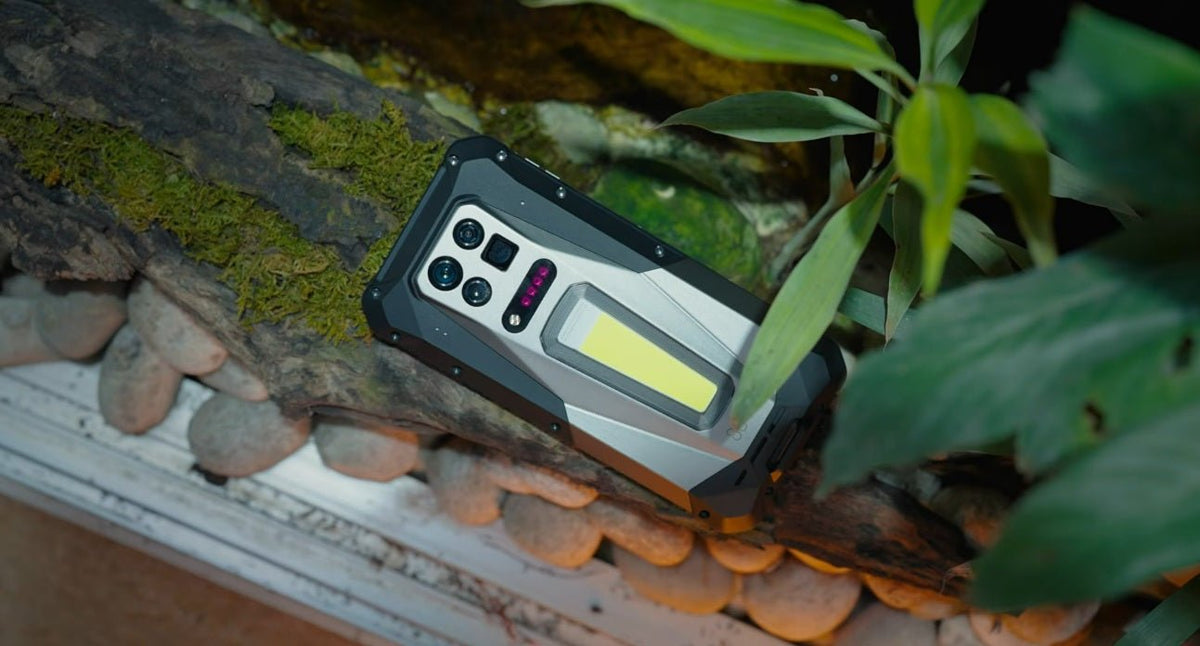
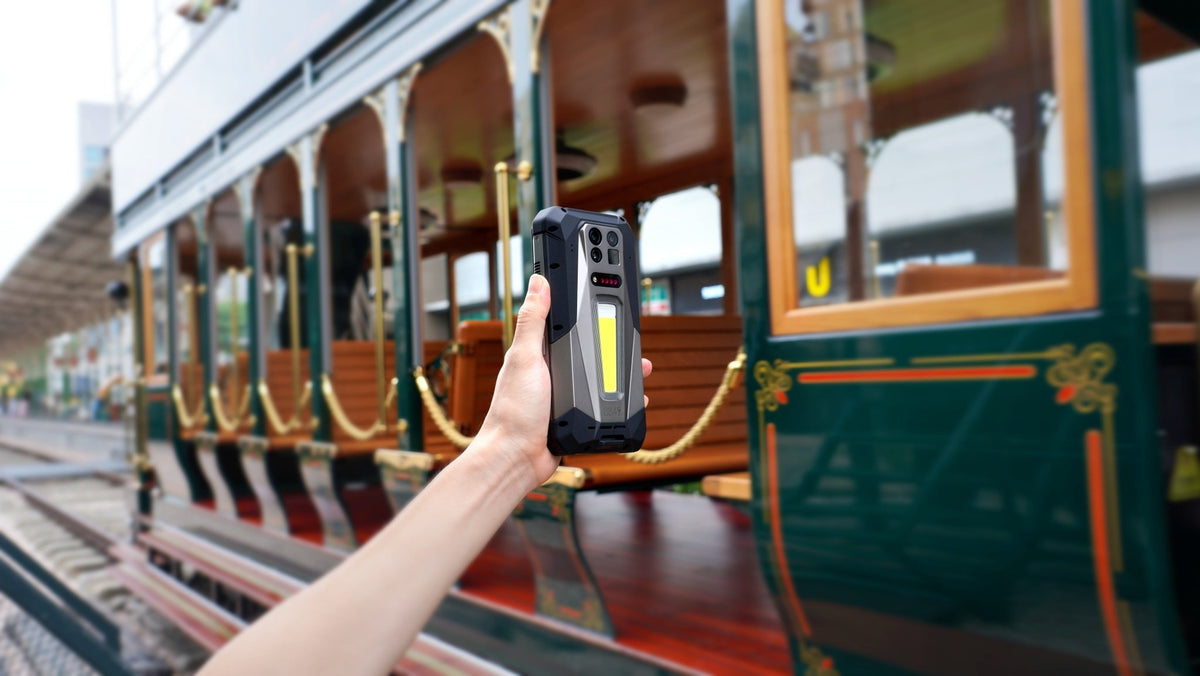
Projector phones are often built tough, since they are designed for people who spend time outdoors. The trade-off is that they tend to be thicker and heavier than a normal smartphone, because the projector, cooling system, and a big battery all need space.
What Is a Small (Portable) Projector?
A small projector is a separate device made to be carried around. They come in a few types:
- Battery-powered smart projectors, which have their own system, Wi-Fi, and apps.
- Plug-in mini projectors, which have no battery or built-in system and rely on a phone, tablet, or laptop for both content and power.
- Compact home projectors, which are small for their category but still need a power outlet.
The biggest advantage of any small projector is that it does one job and does not depend on your phone's design. You can pick a model with the brightness, resolution, or size you want, and replace the phone and projector separately when either gets old.
Projector Phone vs. Small Projector: Key Differences
Here are the differences that matter most when you are deciding.
Portability and What You Carry
A projector phone is one device, so there is nothing extra to pack. But it is bigger and heavier than a normal phone, and you carry that weight every day, even on days you never project anything. A small projector flips this: your phone stays slim, and you only carry the projector when you need it. The better choice depends on whether you project occasionally or all the time.
Setup and Ease of Use
With a projector phone, setup is close to zero. Turn on the projector, aim it, adjust focus, and you are done. A small projector adds a step or two: connecting a cable or pairing wirelessly, then making sure the phone and projector are talking to each other. Plug-in models are simple once you know your phone supports video output over USB-C, but compatibility is worth checking before you buy.
Brightness and Picture Quality
This is where many people expect a big gap, but the reality is closer than you might think. Many projector phones and mini projectors sit around the same brightness level, so both work best in a dark or dim space. Higher-end small projectors can go much brighter and sharper, but they also get larger and more expensive. For casual viewing in the evening or in a tent, a projector phone is usually enough.
Battery and Power
A projector phone with a large battery can run its projector for a long time without a charger, and it's still a phone afterwards. A plug-in mini projector often has no battery at all and takes power from the connected device, so your phone's battery goes down faster while you project. Battery-powered small projectors solve this, but then you have two devices to charge.
Durability and Outdoor Use
Rugged projector phones are built for drops, dust, and rough handling, which makes them a natural fit for camping, job sites, and travel. Small projectors vary. Some have metal shells and feel solid, but many are designed for living rooms and carry less protection. If you will use it outdoors a lot, a rugged build is a real advantage.
Cost and Upgradability
A projector phone costs more than a regular phone, but you only buy one device. A small projector is an extra purchase on top of your phone, although entry-level models can be fairly affordable. Upgrading is also different: with a projector phone, you replace both phone and projector at the same time, while with a separate projector you can upgrade either one on its own.

Tank 2 Pro vs. 8849 Mars: A Real-World Example
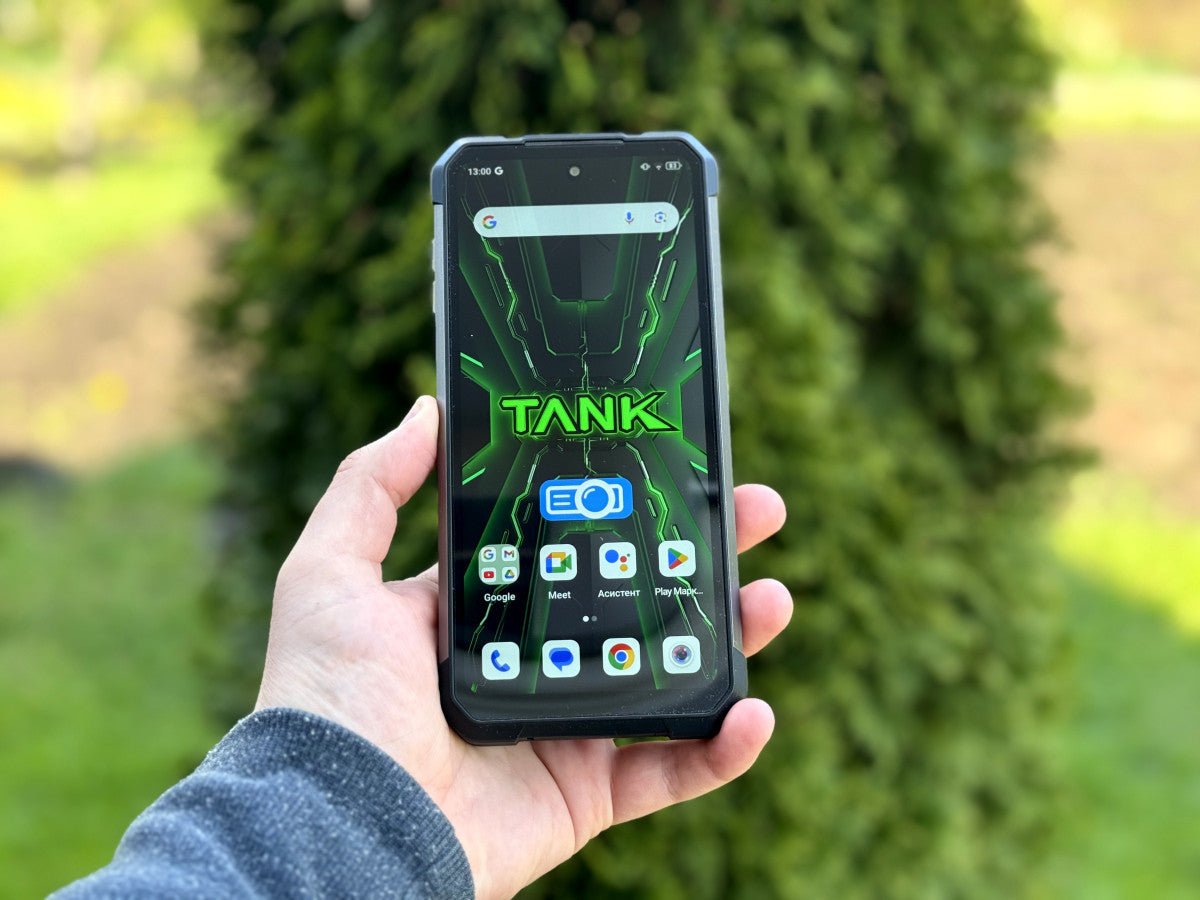
To make these differences concrete, let's compare two real products from the same brand: the Tank 2 Pro, a rugged projector phone, and the 8849 Mars, a plug-in mini projector. They are not direct rivals, which is exactly why they work as examples of each category.
| Tank 2 Pro (projector phone) | 8849 Mars (small projector) | |
|---|---|---|
| Device type | Rugged smartphone with built-in projector | Standalone plug-in mini projector |
| Projection | DLP projector, about 100 lumens | DLP, 720p, 100 lumens |
| Power | 23800 mAh battery | No battery; powered through USB-C |
| Connectivity | Runs its own apps; 4G only | Wired connection to a phone, tablet, or laptop; no Wi-Fi |
| Size and weight | 668 g | 75.8 × 75.8 × 18.5 mm, 179 g |
| Standout strength | Projector, big battery, and phone in one rugged body | Very small and light, easy to drop in a pocket |
| Best for | Outdoor work, camping, long trips | Occasional projection with a phone you already own |
Both projectors sit at a similar brightness, so the difference between them isn't really about the light. It's about everything around it. The Tank 2 Pro is a complete package: you project straight from the phone, the battery is large enough to keep going for a long time, and the body is made for rough use. The cost is size and weight, and since it's a 4G phone, it suits people who care more about battery and projection than about 5G speeds.
The Mars goes the other way. At 179 g and shorter than most smartphones, it is easy to carry anywhere. It needs a wired connection to a source device, and because it has no battery, it draws power from that device. A reviewer on the product page also noted that it works best with USB 3.0+ devices, so it is worth checking your phone's USB-C video support first. For someone who already has a good phone and wants an occasional big screen, that is a very reasonable trade.
Which One Should You Choose?
Here is a simple way to think about it.
- Choose a projector phone if you want everything in one device and often watch or present away from home. It suits camping, travel, and outdoor work, where you do not want to manage extra cables or chargers.
- Choose a small projector if you already own a phone you like and only need to project from time to time. It keeps your phone slim, and you can upgrade the phone and projector separately.
- Consider both if you want a more powerful projector at home and a lighter option for the road. This costs more, but it covers more situations.
Conclusion
Neither option is better in every case. A projector phone gives you convenience, a large battery, and a tougher body, at the cost of extra size and weight. A small projector gives you a lighter phone and more freedom to choose, at the cost of an extra device, extra cables, and extra power demands.
Think about where you will actually use it. If it is mostly outdoors and on the move, a projector phone makes life simpler. If it is an occasional treat with a phone you already love, a small projector is hard to beat.
FAQ
Are projector phones bright enough for daytime use?
Not really. Most projector phones work best in a dark or dim room, a tent, or outdoors after sunset. In bright daylight, the image will look washed out.
Can a small projector work without a phone?
It depends on the model. Plug-in mini projectors need a phone, tablet, or laptop to supply the picture and the power. Smart projectors with a built-in system and battery can work on their own.
Is a projector phone better for camping?
Usually, yes. A projector phone with a large battery and a rugged body handles outdoor conditions well, and you only need to carry one device.
Can I connect a projector phone to a larger projector or TV?
In most cases, yes. A projector phone is still a phone, so it can usually mirror its screen to a TV or another projector through a cable or a wireless connection, depending on the model.
Share:
Tank 2 Pro: A Reliable Big Battery Rugged Phone