

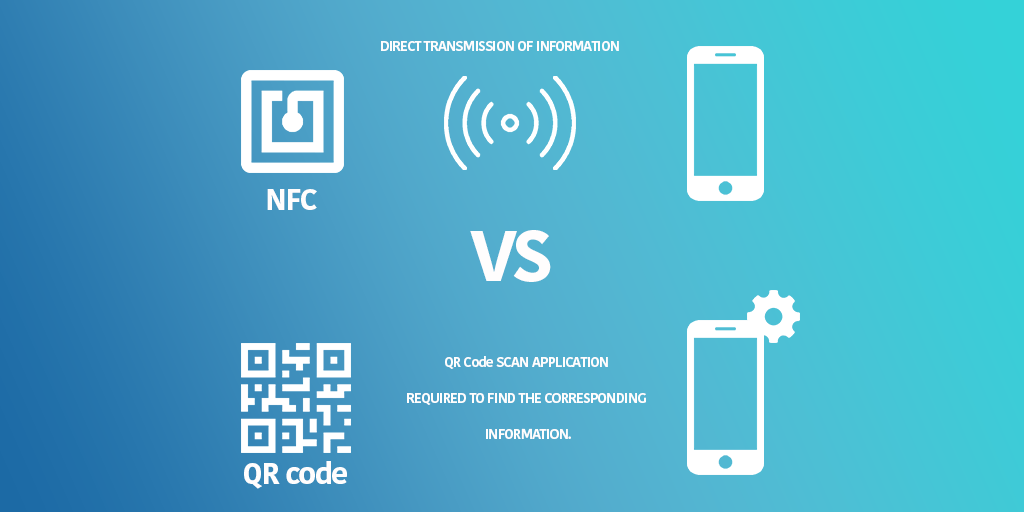
When you want to make a payment, open a website, or access digital information quickly, you may have encountered two common technologies: NFC and QR codes. Both are designed to make interactions faster and more convenient, but they work in completely different ways.
NFC (Near Field Communication) uses short-range wireless communication to exchange data between compatible devices or NFC tags, while QR codes rely on a camera to scan a visual pattern that contains stored information. Although both technologies are widely used in areas like mobile payments, marketing, and smart devices, they offer different advantages depending on the situation.
In this article, we will compare NFC vs QR codes, explain how each technology works, and explore their key differences to help you understand which option is better for different use cases.
What Is NFC and How Does It Work?
NFC (Near Field Communication) is a short-range wireless technology that allows two compatible devices or an NFC-enabled device and tag to exchange small amounts of data. It is designed for quick interactions and usually works when devices are placed within a few centimeters of each other.
NFC works by using electromagnetic fields to establish a connection between an NFC chip and a compatible reader. When you tap your phone against an NFC terminal or tag, the two devices can exchange information instantly without requiring cables or manual pairing. Some common examples of NFC use include:
- Contactless payments with smartphones or smartwatches
- Digital keys for cars, hotels, or smart locks
- Quick device pairing with accessories
- NFC tags for automation and information sharing
What Is a QR Code and How Does It Work?
A QR code (Quick Response code) is a two-dimensional barcode that stores information in a pattern of black and white squares. Unlike NFC, QR codes do not require wireless communication and can be easily created, printed, and shared in both physical and digital formats.
QR codes work by using a smartphone camera or scanner to recognize the pattern and convert it into readable information. After scanning, users can be directed to a website, payment page, app, or other digital content. Some common examples of QR code use include:
- Opening websites or product information pages
- Making mobile payments
- Accessing digital menus in restaurants
- Sharing contact details or Wi-Fi information
NFC vs QR Codes: Key Differences
Although NFC and QR codes are often used for similar purposes, such as payments, information sharing, and quick access to digital content, they work in different ways. NFC relies on short-range wireless communication, while QR codes require a camera to scan a visual pattern. The following table highlights the main differences between these two technologies.
| Feature | NFC | QR Codes |
|---|---|---|
| Technology | Uses short-range wireless communication between NFC chips and compatible devices | Uses a two-dimensional barcode that stores information in a visual pattern |
| How it works | Devices exchange data when they are brought close together | A smartphone camera scans the code and converts it into readable information |
| Operating range | Typically around 0–4 cm for most NFC interactions, although some NFC systems can work at greater distances | Depends on camera quality and code size; usually works from a few centimeters to several meters |
| Required hardware | Requires an NFC chip and a compatible reader or device | Requires a camera or QR code scanner app |
| Connection speed | Very fast, usually taking less than a second for simple actions | Fast, but requires users to open a camera or scanning function first |
| Internet requirement | Basic NFC functions do not always require an internet connection | Scanning works offline, but many QR code actions require internet access afterward |
| Security | Generally more secure for sensitive actions because of its very short communication range | More vulnerable to copying or replacement because QR codes can be easily duplicated |
| Common uses | Contactless payments, digital keys, device pairing, NFC tags | Website links, mobile payments, menus, product information, event tickets |
👉Read More: NFC vs Bluetooth
Pros and Cons of NFC
NFC is designed for fast and seamless interactions, making it especially useful when convenience, speed, and security are important. However, compared with QR codes, NFC also has some limitations in terms of accessibility and implementation costs.
Pros of NFC:
- Faster interactions with a simple tap or close-range connection
- More secure for sensitive actions due to its short communication range
- Provides a smoother user experience without opening a camera or scanning an image
- Can support advanced features such as digital keys and device automation
- Works without an internet connection for many basic functions
Cons of NFC:
- Requires NFC-enabled devices and compatible hardware
- Usually costs more to implement than printed QR codes
- Has a much shorter operating range compared with QR codes
Pros and Cons of QR Codes
QR codes are popular because they are affordable, easy to create, and accessible on almost any smartphone. While they are more flexible than NFC in many situations, they may not provide the same level of convenience and security.
Pros of QR Codes:
- Low-cost and easy to generate or print on different surfaces
- Works with almost any smartphone that has a camera
- Can share large amounts of information, such as URLs or digital content
- Easy to distribute through both physical and online channels
- Does not require special hardware like NFC readers
Cons of QR Codes:
- Requires users to manually scan the code with a camera
- Less secure because QR codes can be copied, replaced, or redirected
- Usually provides a less seamless experience compared with NFC tap interactions
- May depend on an internet connection to access the linked content
NFC vs QR Codes: Which is Better?
NFC and QR codes both make digital interactions faster and more convenient, but the better choice depends on your specific needs. NFC focuses on seamless, close-range interactions, while QR codes are designed for easy access and wide compatibility.

Which is better?
NFC is a better option when you want a quick and frictionless user experience. A simple tap can complete an action instantly, making it ideal for situations where users interact frequently or where security is important.
QR codes are a better choice when you need a low-cost solution that can be shared widely. Since almost every modern smartphone has a camera, QR codes can be used by a larger number of people without requiring additional hardware.
NFC and QR Codes Can Work Together
In many cases, NFC and QR codes are not direct replacements for each other. Businesses often use both technologies to provide different options for users. For example, a payment system may support NFC for quick tap payments while also offering QR codes as an alternative method.
Overall, NFC is the better choice for fast, secure, and seamless interactions, while QR codes remain a practical solution for affordable and widely accessible information sharing.
Final Thoughts
NFC and QR codes are both useful technologies that make digital interactions faster and more convenient, but they are designed for different purposes. NFC provides a smoother and more secure experience for short-range interactions like contactless payments and device pairing, while QR codes offer a simple and affordable way to share information with almost any smartphone. Instead of replacing each other, these two technologies continue to work together in different scenarios, giving users more flexible options.
FAQs
Is NFC more secure than QR codes?
Generally, NFC is considered more secure than QR codes for sensitive interactions because it requires devices to be very close together, usually within a few centimeters. QR codes can be copied or replaced more easily, which creates potential security risks if users scan a fake code. However, the overall security of both technologies also depends on how they are implemented and used.
Do QR codes work without the internet?
Yes, QR codes can be scanned without an internet connection if they store information directly, such as text or contact details. However, many QR codes are used to open websites, payment pages, or online services, which require an internet connection after scanning.
Does my phone need NFC to scan QR codes?
No. QR codes and NFC use different technologies. Any smartphone with a working camera can usually scan QR codes, even if it does not have NFC support.
Do all phones have NFC?
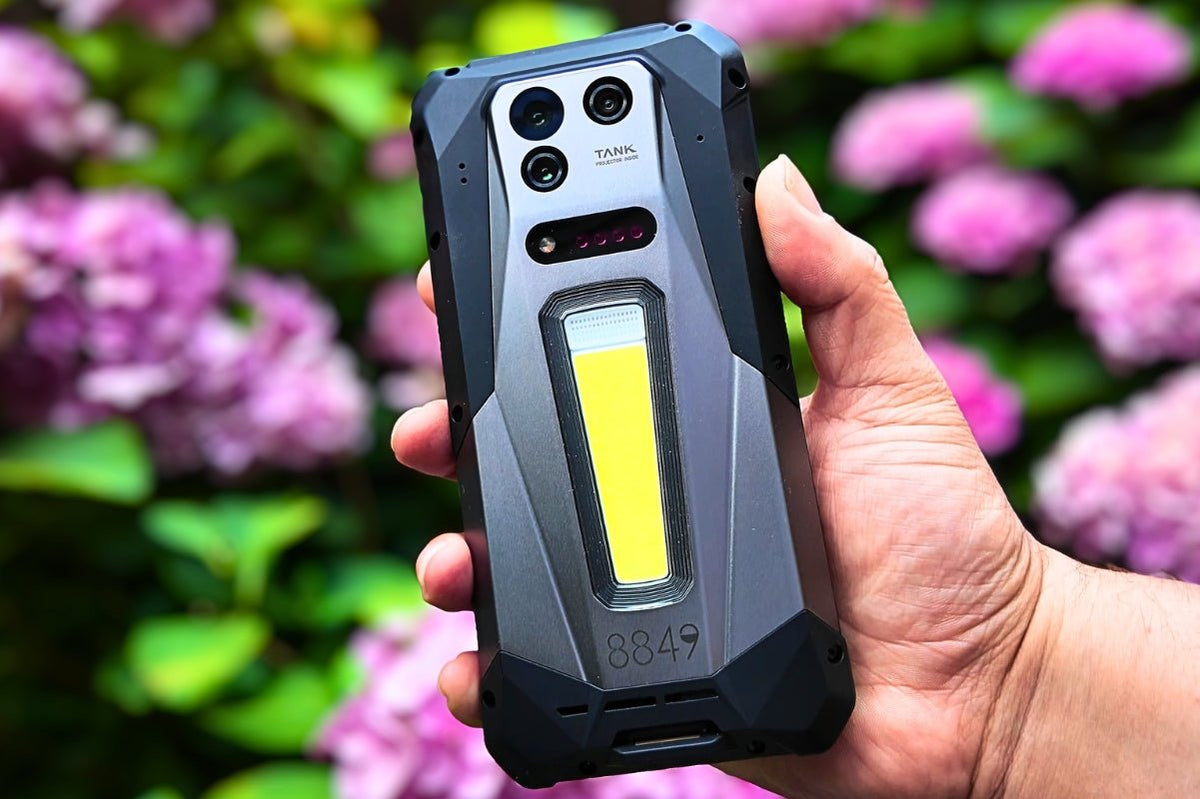
No, not all phones have NFC. Many modern smartphones include NFC support, especially mid-range and flagship models, but some budget devices may not offer this feature. For example, the 8849 Tank 5 includes NFC support, allowing users to enjoy features such as contactless payments and quick device interactions.

Deli:
NFC vs. Bluetooth: What's the Difference?
4 najboljši robustni telefoni v letu 2026: izbrani s testiranjem