

NFC and Bluetooth are two of the most common wireless technologies found in modern smartphones and electronic devices. Although they both allow devices to communicate without cables, they are designed for different purposes.
NFC (Near Field Communication) focuses on quick, short-range interactions, such as contactless payments and instant device pairing, while Bluetooth is built for longer-distance connections, such as wireless audio, file sharing, and connecting smart accessories.
In this article, we will explore the key differences between NFC and Bluetooth, including their range, speed, power consumption, security, and common applications, helping you understand which wireless technology is better suited for different situations.
An Overview of NFC vs Bluetooth
Before looking at the detailed differences between NFC and Bluetooth, it is helpful to see how these two wireless technologies compare at a glance. Although both allow devices to communicate wirelessly, their designs focus on different priorities. NFC is optimized for fast, close-range interactions, while Bluetooth is designed for maintaining connections over longer distances.
| Feature | NFC | Bluetooth |
|---|---|---|
| Full name | Near Field Communication | Bluetooth |
| First introduced | 2004 | 1999 |
| Communication method | Electromagnetic induction | 2.4 GHz radio waves |
| Typical range | Around 4 cm (up to about 10 cm in some cases) | Usually 10 meters; up to 100 meters or more with certain Bluetooth classes and devices |
| Data transfer speed | Up to around 424 Kbps | From around 1 Mbps (Bluetooth Low Energy) to 3 Mbps (Bluetooth Classic); newer versions can support higher speeds |
| Connection setup | Almost instant; usually requires a simple tap or close proximity | Usually requires device discovery and pairing |
| Power consumption | Extremely low; can work with passive NFC tags without a battery | Low power, especially with Bluetooth Low Energy (BLE), but generally higher than NFC |
| Main applications | Contactless payments, access cards, quick pairing, identity verification | Wireless earbuds, speakers, smartwatches, keyboards, file transfers |
| Internet required | No | No |
| Security advantage | Short communication distance reduces the chance of unwanted interception | Uses encryption and authentication but operates over a longer range |
The comparison shows that NFC and Bluetooth are not direct replacements for each other. NFC excels at quick and simple interactions where devices only need to exchange small amounts of information, while Bluetooth is better suited for continuous connections that require more data and a longer operating range. In many modern devices, both technologies work together to provide a more convenient wireless experience.
What Is the Difference Between NFC and Bluetooth?
Although NFC and Bluetooth use different methods to connect devices, they share the same goal: enabling convenient wireless communication without cables.
What Is NFC?
NFC, short for Near Field Communication, is a wireless technology that allows two devices to exchange small amounts of data when they are placed very close together. It works through electromagnetic induction, where an NFC-enabled device creates a short-range magnetic field to communicate with another NFC chip.
Because it only works over a very short distance, usually within a few centimeters, NFC is designed for quick and simple interactions rather than large data transfers. Common examples of NFC use include contactless payments, digital access cards, identity verification, and quickly pairing compatible devices.
What Is Bluetooth?
Bluetooth is a wireless communication technology that allows devices to exchange data over short to medium distances using 2.4 GHz radio waves. Unlike NFC, Bluetooth is designed to maintain continuous connections between devices, making it suitable for applications that require ongoing data transfer.
Depending on the Bluetooth version and device type, it can typically operate within a range of around 10 meters or more. Today, Bluetooth is widely used for wireless earbuds, speakers, keyboards, smartwatches, fitness trackers, and other connected accessories.
Which One Is Faster and More Convenient?
When comparing NFC and Bluetooth, “faster” can mean two different things. NFC is usually faster when it comes to establishing a connection because devices can communicate almost instantly with a simple tap. Bluetooth, on the other hand, is faster when transferring larger amounts of data or maintaining a continuous connection between devices.
NFC: Faster for Quick Connections
One of the biggest advantages of NFC is its simplicity and speed when starting a connection. NFC-enabled devices usually connect immediately when placed close together, without requiring users to search for devices, enter pairing codes, or adjust complicated settings. This makes NFC especially convenient for everyday tasks such as contactless payments, unlocking smart locks, or quickly pairing compatible accessories.
NFC also consumes very little power because it only works over a very short distance and is designed for small data exchanges. In some cases, NFC tags do not even require their own battery and can be powered by the electromagnetic field generated by an NFC-enabled device.
Bluetooth: Faster for Data Transfer
While Bluetooth may take slightly longer to establish a connection, it is much better suited for transferring larger amounts of data over a longer period. Modern Bluetooth versions, especially Bluetooth Low Energy (BLE), provide efficient wireless communication while maintaining stable connections between devices.
This makes Bluetooth the preferred choice for activities that require continuous data transmission, such as listening to wireless earbuds, using smartwatches, connecting keyboards, or transferring files between devices. Its longer range also allows users to stay connected without keeping devices extremely close together.
Overall, NFC is faster when you need a quick connection with minimal effort, while Bluetooth is faster when you need to transfer more data or maintain a wireless connection for an extended period. The better choice depends on what you want to accomplish.
Which One Is Better for Different Uses?
NFC and Bluetooth are designed for different types of wireless communication, so the better choice depends on the specific situation. Instead of replacing each other, they are often used for different tasks based on factors such as connection distance, data requirements, and convenience.
| Use Case | Better Choice | Why |
|---|---|---|
| Contactless payments | NFC | NFC provides fast and secure short-range communication, making it ideal for mobile payments and digital wallets. |
| Wireless earbuds and speakers | Bluetooth | Bluetooth supports continuous audio streaming and allows devices to stay connected over a longer distance. |
| Smartwatches and fitness trackers | Bluetooth | These devices need an ongoing low-power connection to exchange data with smartphones. |
| Quick device pairing | NFC | NFC can instantly trigger a connection without requiring users to search for devices or enter pairing codes. |
| File transfer | Bluetooth | Bluetooth offers higher data transfer speeds and a longer range, making it more suitable for sending larger files. |
| Access cards and smart locks | NFC | NFC enables quick authentication through a simple tap and works well for secure access control. |
| Sharing small amounts of information | NFC | NFC is convenient for quickly sharing small data such as contact details, links, or device settings. |
As the table shows, NFC is generally the better option for fast, simple interactions where devices only need to exchange a small amount of information. Bluetooth is the better choice for situations that require continuous communication, longer range, or higher data transfer speeds.
Is NFC More Secure Than Bluetooth?
NFC is often considered more secure than Bluetooth for certain applications because it only works over a very short distance, usually within a few centimeters. This limited range makes it much harder for unauthorized devices to intercept communication during activities such as contactless payments or access authentication. In addition, NFC transactions often use additional security measures, such as tokenization in mobile payment systems, rather than directly sharing sensitive information.
However, Bluetooth should not be considered an insecure technology. Modern Bluetooth versions use encryption and authentication methods to protect wireless connections, especially for devices such as earbuds, smartwatches, and other accessories. While its longer communication range provides more convenience, it also means users should be careful about pairing with unknown devices and keeping their software updated.
Overall, NFC has an advantage in scenarios requiring short-range security, while Bluetooth is designed to provide secure and flexible connections over longer distances.
Can NFC and Bluetooth Work Together?
Yes, NFC and Bluetooth can work together, and many modern devices use both technologies to improve convenience. For example, some wireless headphones and speakers use NFC for quick pairing, allowing users to tap their phone against the device to start a Bluetooth connection automatically.
In this case, NFC handles the fast initial setup, while Bluetooth takes over for the ongoing data transfer, showing that these two technologies are often complementary rather than direct competitors.
NFC vs Bluetooth: Which One Should You Choose?
NFC and Bluetooth are not competing technologies where one completely replaces the other. Instead, each one is designed for different situations. The right choice depends on whether you need quick interactions, longer-range connections, or continuous data transfer.
Choose NFC if you need:
- Fast and simple connections with a tap.
- Contactless payments and digital access solutions.
- Low-power communication for small amounts of data.
- Quick device pairing without searching or entering codes.
Choose Bluetooth if you need:
- Wireless audio streaming for earbuds, headphones, or speakers.
- Connections over longer distances.
- Continuous communication with smart devices such as watches and fitness trackers.
- Faster transfer of larger amounts of data.
In most cases, modern smartphones benefit from supporting both NFC and Bluetooth because they solve different wireless communication needs. NFC makes everyday interactions faster and simpler, while Bluetooth provides the flexibility needed for connected accessories and data-heavy tasks.
Choosing a Powerful NFC Phone: 8849 Tank 5

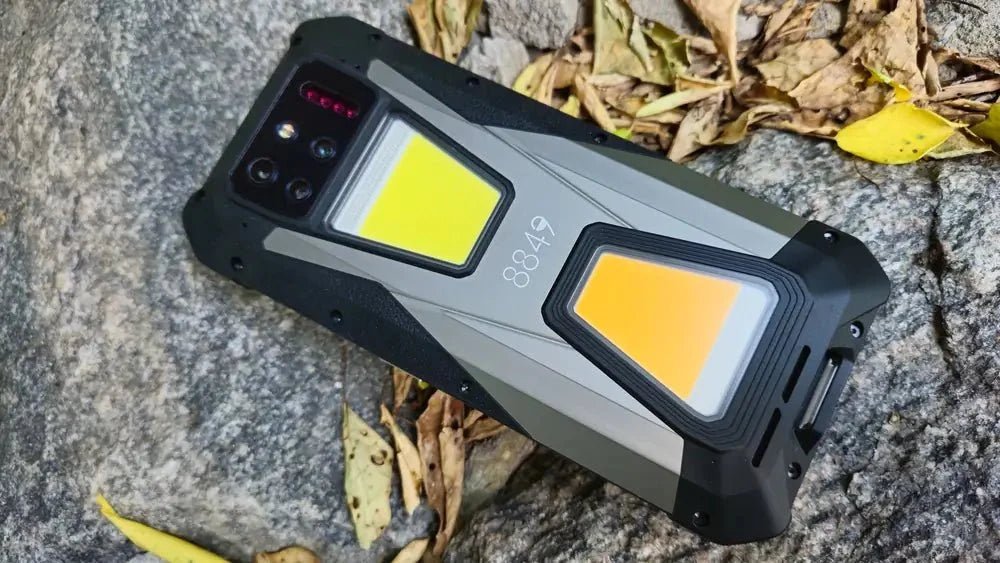
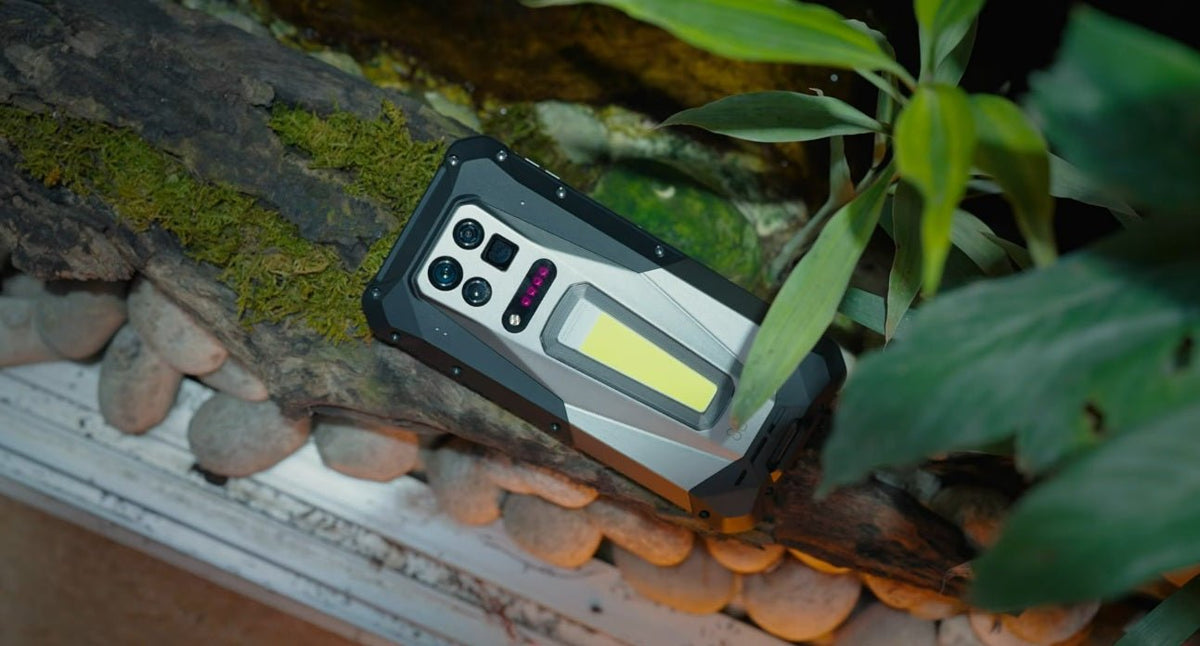
For users who want a smartphone with modern connectivity features and strong performance, the 8849 Tank 5 is an example of a rugged phone that combines NFC support with powerful hardware. Designed for outdoor users and demanding environments, it offers a balance between durability, performance, and smart features.
Key features of the 8849 Tank 5 include:
- NFC support: Allows convenient contactless interactions, including payments and quick connections with compatible devices.
- 2K projector: Built-in projector capability for displaying videos, presentations, and entertainment content.
- Large battery capacity: Provides extended usage time for outdoor activities and travel.
- High-performance hardware: Powered by the MediaTek Dimensity 9400e platform for smooth performance across daily tasks and demanding applications.
With NFC, Bluetooth, and other modern smartphone features combined, the Tank 5 is designed for users who need a durable device that can handle both everyday communication and outdoor scenarios.
Final Thought
NFC and Bluetooth serve different purposes, and neither technology is universally better than the other. NFC is ideal for quick, close-range interactions such as mobile payments and instant pairing, while Bluetooth is better suited for longer-range connections, audio streaming, and continuous communication.
Understanding the differences between these two wireless technologies can help you choose the right option for your needs and make better use of the features available on modern smartphones.
Deli:
What Is NFC: Definition, Benefits & Usage
NFC vs QR Code: What’s the Difference?