

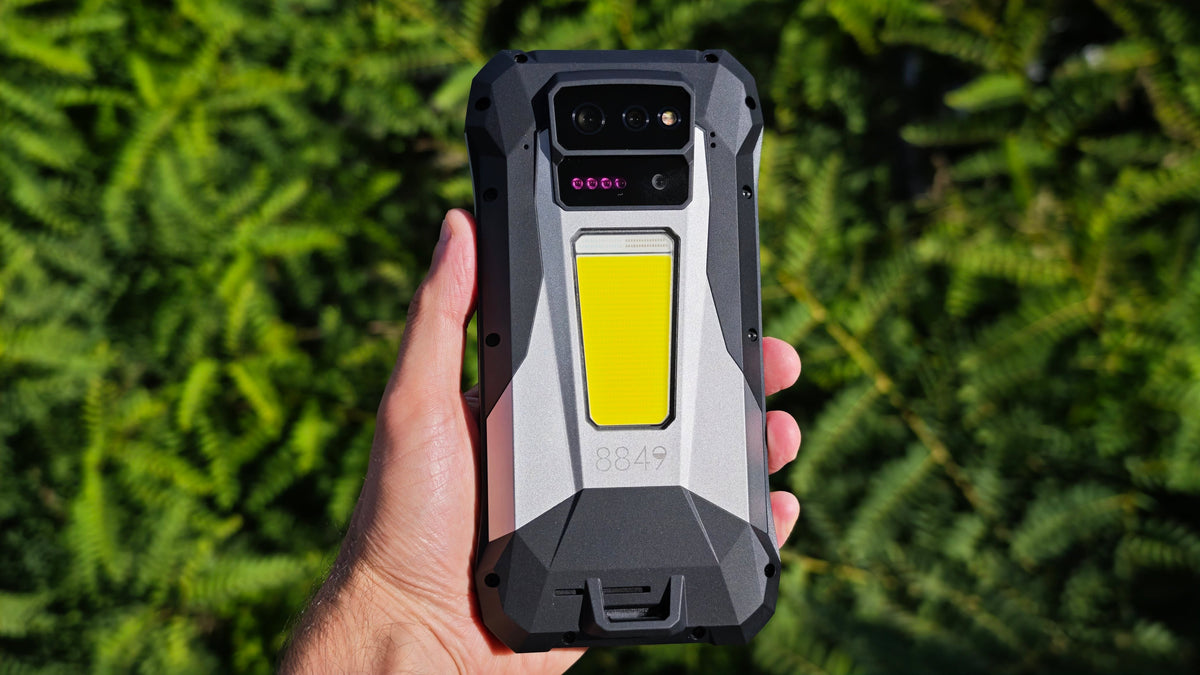
The fire is burning low, the dishes are done, and nobody is ready to call it a night. This is the moment when a mobile projector earns its place in your pack. With one small device, a blank tent wall or a hung bedsheet becomes a cinema screen, a map table, or a karaoke stage.
A mobile projector is easy to carry and works without a power outlet. If you want to bring one without adding extra gear, rugged mobile phones with a built-in projector are the simplest way to do it. In this guide, we'll walk through the five best ways to use a mobile projector on a camping trip, then show you how to choose the right one.
What Is a Mobile Projector and Why It Suits Camping?
A mobile projector is a compact projector designed to be carried and used anywhere. Unlike a home theater projector, which sits on a ceiling mount and plugs into the wall, a mobile projector is small enough to fit in a backpack, runs on a built-in battery, and connects wirelessly to your content. You set it down, point it at a surface, and you have a big picture in a minute or two.
There are two main types:
- Standalone mini projector - a small box you carry alongside your phone. These can work well, but they are one more device to charge, pack, and keep dry.
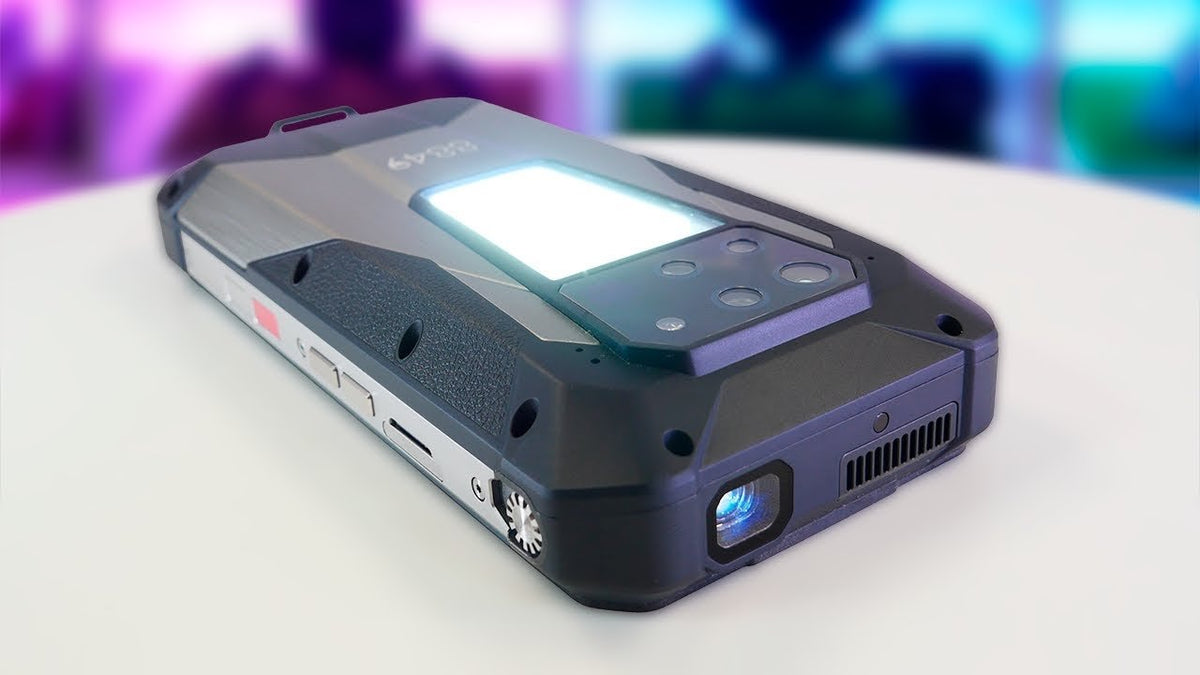
- Projector phone - a smartphone with a projector built into the body. Because the phone already holds your movies, maps, music, and apps, there is nothing to pair and no extra cable to lose. For camping, where every item in the bag needs a reason to be there, that simplicity matters.
This is where rugged mobile phones come in. If the term is new to you, ruggedized mobile phones are smartphones built to handle conditions that would damage a regular phone: water, dust, mud, drops, and extreme temperatures. They usually carry much larger batteries than standard phones too, which is exactly what a projector needs, since projecting a video drains power faster than almost anything else a phone does.
Camping is the ideal test for this combination. Evening dew, a sudden shower, sandy ground, and a phone knocked off a camp table are all normal parts of a trip. A rugged phone with a built-in projector is designed to take those moments in stride, so you can enjoy the evening instead of worrying about your gear.
1. Outdoor Movie Nights Under the Stars
This is the use that most people picture first, and it still might be the best one. A movie night turns an ordinary evening at the campsite into something the whole group remembers.
The setup is simple. A light-colored tent wall, a white bedsheet, or a pale tarp stretched between two trees all work as a screen. Place the projector on a flat surface, such as a folding table or a cooler, and adjust the distance until the picture is sharp and fills the surface. Wait for full darkness, and the image will look far brighter and clearer than it does at dusk.
Picture quality matters more than you'd expect, because outdoor screens are rarely perfect. A projector phone like the 8849 Tank X, which offers 1080p projection, gives you a crisp, watchable image even on a slightly uneven bedsheet. Battery life matters just as much. Download your movie in advance so you don't depend on a weak signal, and make sure the battery can handle a full film with some charge to spare.
2. Family Entertainment and Rainy-Day Backup
Camping with kids brings its own challenges, and a projector can solve several of them. A cartoon on the tent ceiling at bedtime helps younger children settle into a strange new place. A short film or story session can also fill the gap when a storm cancels the day's hike and everyone is stuck inside.
The projector also works well as a shared screen for family activities. You can show the photos taken earlier that day, play a nature documentary about the area, or run a slideshow of past trips while everyone snacks in their sleeping bags.
Durability is a real advantage here. Children are rarely gentle with devices, and a camp environment is not forgiving. A rugged phone built to handle drops and splashes is a safer choice than a fragile projector sitting on an unsteady surface.
3. Trip Planning, Maps, and Route Briefings
Not every use for a projector is about entertainment. On longer trips, a projector can make the practical side of camping easier. Instead of gathering four people around one small phone screen, you can project an offline map or a trail route onto a tent wall or a flat rock face. Everyone can see the elevation changes, the water sources, and the turning points at once, which makes planning tomorrow's route a group discussion instead of a squint.
This also helps with safety briefings. If you are leading a group, a projected map makes it easier to agree on a meeting point and a backup plan.
4. Camp Games, Music, and Group Fun
Once the practical business is done, a mobile projector can run the entertainment. Karaoke is a favorite: put the lyrics on the screen, hand around a Bluetooth speaker, and the campsite becomes a stage. Trivia nights, party games, and photo slideshows from the trip all work well, and everything runs from apps already on your phone.
This is where performance counts. Smooth apps, fast loading, and responsive controls keep the group's attention. Flagship rugged models such as the Tank 5 Pro are built for that kind of all-round use, so the phone that handles your navigation in the morning can also host the party that night.
Keep the volume considerate. Sound carries a long way across a quiet campground, so check the rules and your neighbors before turning up the music.

5. Outdoor Learning, Stargazing, and Group Workshops
A projector can also turn a camping trip into a learning experience. Project a star chart while you look up at the real sky, and the constellations suddenly make sense. Show nature guides to help identify the plants, birds, and insects you've found around camp. Scout leaders, school groups, and team-building organizers can even use a projector to run a short presentation or workshop without needing a classroom.
Sharp text is important for these uses. Star charts and presentations have fine detail, and a low-resolution image makes them hard to read from a few meters away. A phone with a higher-resolution projector, such as the Tank 5 with its 2K projection, keeps small labels and diagrams readable for the whole group.
How to Choose a Mobile Projector for Camping
The right device depends on how you camp. A weekend car-camping trip with the family has different needs from a multi-day backpacking trek. Still, a few factors apply to almost every buyer. The table below shows what to look for and why each one matters outdoors.
| Factor | What to Look For | Why It Matters at Camp |
|---|---|---|
| Resolution | 1080p at minimum; 2K for fine text and maps | A sharper image stays readable on a bedsheet or tent wall |
| Brightness | Enough output to stay clear after dusk | Twilight and campfire glow wash out dim projectors |
| Battery capacity | A large battery, ideally with fast charging | Projection drains power quickly, and outlets are rare |
| Durability | IP68 or higher dust and water protection | Rain, mud, and dew are part of any trip |
| Portability | A size and weight you're willing to carry | Heavy gear is left at home, however good it is |
| Storage and connectivity | Room for offline movies and maps; Bluetooth for speakers | Signal is unreliable, so offline content is essential |
A few habits will improve any setup. Choose a light-colored, flat surface, project after full dark, and carry a power bank as backup. Test the projector at home first, so you know the focus and distance before the trip starts.
If you want a single device that covers most of these boxes, a rugged projector phone is a strong option. It combines the projector, the battery, and the weather protection in one body, which is hard to match with separate gear.
Conclusion
A mobile projector does more than show movies. On a camping trip, it can run a family cinema, brief the group on tomorrow's route, host karaoke, and teach everyone the night sky. The key is choosing a device that can handle the outdoors, and that is why rugged mobile phones with built-in projectors fit camping so naturally: they are tough, they have the battery to keep going, and they save you from carrying extra equipment.
Next time you pack for a trip, think about what the evenings could look like. A little planning and the right device can turn quiet hours at camp into the best part of the trip.
FAQ
Can you use a mobile projector in daylight?
It is difficult. Most mobile projectors need low light to produce a clear image. For best results, wait until dusk or use a shaded area, such as the inside of a tent.
What can I project onto if I don't have a screen?
A light-colored tent wall, a white bedsheet, or a pale tarp all work well. Make sure the surface is flat and pulled tight to avoid wrinkles in the picture.
Are rugged mobile phones with projectors worth it for camping?
For most campers, yes. They combine a projector, a big battery, and weather protection in one device, which reduces the amount of gear you carry and the risk of damage outdoors.

Share:
Why Choose 8849 Rugged Smartphones?