
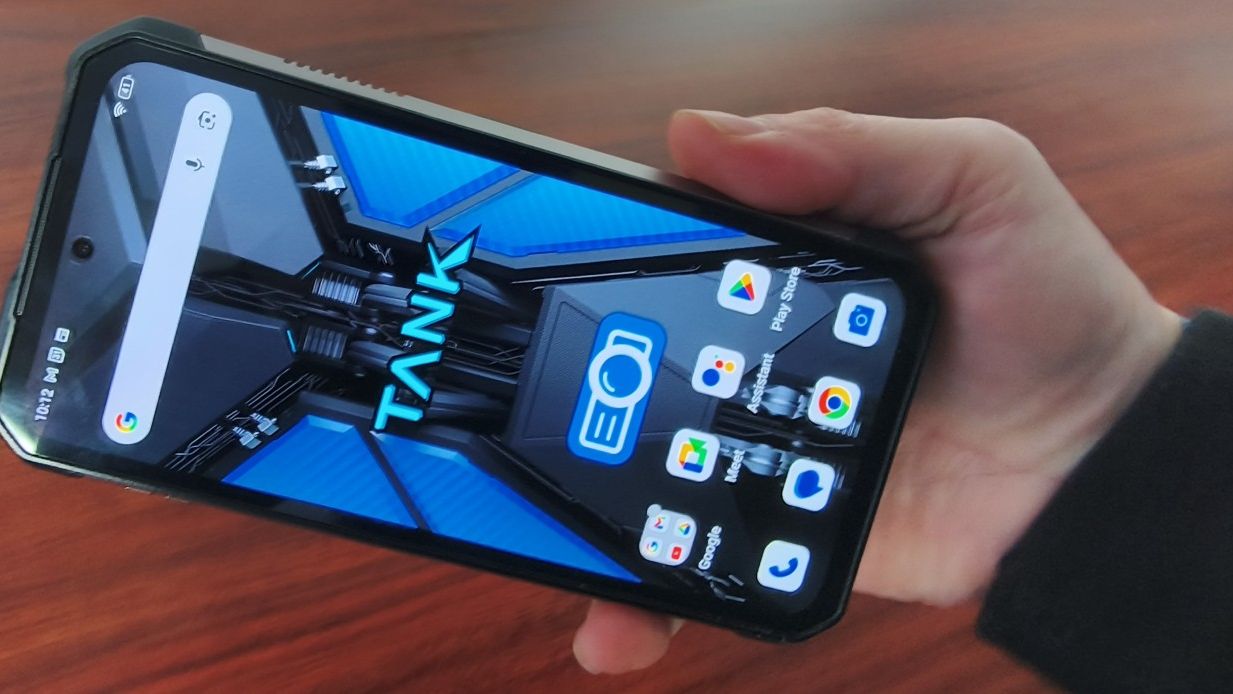
Smartphone displays have changed dramatically over the past decade, and AMOLED technology is one of the biggest reasons why modern phones look more vivid and immersive than ever before. From flagship devices to mid-range models and even some rugged smartphones, AMOLED displays are now widely used because they can deliver deep blacks, vibrant colors, high contrast, and a smoother viewing experience compared to many traditional LCD panels.
Today, an AMOLED phone is no longer considered a luxury product only for premium users. As display technology becomes more advanced and affordable, more brands are adopting AMOLED panels for gaming, streaming, outdoor use, and everyday smartphone tasks. Even the AMOLED rugged phone market has started to grow, combining durable hardware with higher-quality screens for users who work outdoors, travel frequently, or simply want a better visual experience on a tough device. In this guide, we will explain what an AMOLED display is, how it works, its advantages and disadvantages, and whether it is the right choice for your next phone.
What Is an AMOLED Display?
An AMOLED display is a type of screen technology commonly used in modern smartphones, tablets, smartwatches, and other electronic devices. The term “AMOLED” stands for Active Matrix Organic Light Emitting Diode. Unlike older display technologies, AMOLED panels use organic compounds that emit light individually when electricity passes through them. This allows the screen to produce bright colors, deep blacks, and high contrast without relying on a separate backlight layer.
The “active matrix” part of AMOLED refers to the system that controls each individual pixel quickly and efficiently. Because every pixel can light up or turn off independently, an AMOLED phone can display darker scenes more accurately while also improving responsiveness and visual smoothness. This technology is especially useful for high-refresh-rate displays, always-on display features, and media-heavy smartphone usage, such as gaming or video streaming.
AMOLED displays first became popular in premium flagship smartphones, but today they are found across many different price ranges. In recent years, some manufacturers have also started introducing AMOLED rugged phone models that combine durable designs with more advanced display quality. As smartphone users increasingly expect better visuals, thinner devices, and improved viewing experiences, AMOLED technology has become one of the most recognized display types in the mobile industry.
How an AMOLED Display Works
To understand why AMOLED screens look different from many traditional smartphone displays, it helps to look at how the technology is built. An AMOLED display is made up of millions of tiny pixels, and each pixel can produce its own light independently. Instead of using a large backlight behind the screen, the display controls brightness and color directly at the pixel level.

A typical AMOLED display structure includes several important layers and components:
-
Organic light-emitting materials: These organic compounds form the emissive layer. When an electric current passes through them, they glow (electroluminescence), producing light and color directly at each pixel. This eliminates the need for a backlight, unlike LCD screens.
-
Active matrix layer: This is the thin-film transistor (TFT) layer that controls each pixel individually. It helps AMOLED screens respond quickly and display smooth animations or high refresh rates.
-
Red, green, and blue subpixels: Every pixel is usually made up of smaller RGB subpixels that combine to produce different colors on the screen.
-
Additional protective and structural layers: These include a cover lens (outermost protective glass), substrates, conductive layers (such as the anode), and encapsulation. Many AMOLED panels use flexible substrates, making them ideal for curved and foldable designs.
One of the biggest advantages of this design is that pixels can completely turn off when displaying black content. This is why AMOLED displays are known for deep blacks and strong contrast ratios. It also helps reduce power consumption in certain situations, especially when dark mode or always-on display features are enabled. Because of these characteristics, AMOLED technology has become especially popular in smartphones designed for entertainment, gaming, outdoor visibility, and premium viewing experiences.
Advantages of AMOLED Phones
AMOLED technology has become widely popular for a reason. Whether users are watching videos, gaming, scrolling through social media, or using their phones outdoors, AMOLED displays can noticeably improve the visual experience. While the exact performance depends on the quality of the panel and the phone itself, most AMOLED phones share several major advantages.
- Deep blacks and high contrast: Since individual pixels can turn off completely, black areas appear truly black instead of dark gray. This creates a stronger contrast and makes images look more detailed and immersive.
- More vibrant colors: AMOLED displays are known for rich and saturated colors, which can make photos, movies, and games appear more vivid and eye-catching.
- Better viewing experience for entertainment: The combination of high contrast, fast response times, and strong color performance makes AMOLED phones especially popular for streaming videos and mobile gaming.
- Thin and lightweight display design: AMOLED panels do not require a separate backlight layer, allowing manufacturers to create slimmer devices with narrower bezels and more modern designs.
- Power efficiency in dark mode: When dark mode is enabled, black pixels can remain turned off, which may help reduce battery consumption during everyday use.
- Support for always-on display features: Many AMOLED phones can show the time, notifications, or battery status while keeping most pixels turned off, helping users access information quickly without significantly affecting battery life.
- Improved outdoor visibility on premium panels: High-end AMOLED displays can reach very high brightness levels, making them easier to view under direct sunlight compared to some older smartphone screens.
AMOLED vs OLED vs LCD: What’s the Difference?
To better understand modern smartphone screens, it is useful to compare the three most common display technologies: AMOLED, OLED, and LCD. Although they are often mentioned together, each one has a different structure, performance profile, and use case. The table below provides a clear side-by-side comparison.
| Feature | AMOLED | OLED | LCD |
|---|---|---|---|
| Backlight | No (self-emissive pixels) | No (self-emissive pixels) | Yes (requires backlight) |
| Contrast | Very high (true blacks) | High | Moderate |
| Color Performance | Vibrant, saturated | Natural to vibrant | Natural, less contrast |
| Power Efficiency | High (especially in dark mode) | High | Lower (backlight always on) |
| Thickness | Very thin | Thin | Thicker |
| Response Time | Very fast | Fast | Slower |
| Common Usage | Premium phones, modern devices, some rugged AMOLED phone models | TVs, smartphones, monitors | Budget phones, laptops, older devices |
In practical terms, AMOLED displays are generally considered the most balanced option for modern smartphones. They offer excellent visual quality, power efficiency, and design flexibility, which is why they are widely used in flagship devices and increasingly in rugged AMOLED phone models. OLED performs similarly but is often used in slightly different implementations depending on the device type, while LCD remains a cost-effective choice for budget-oriented products or devices where affordability is the priority.
What to Look for When Buying an AMOLED Phone
When choosing an AMOLED phone, it is not just about whether the device uses this display technology. The real difference comes from how well the panel is implemented. Factors such as refresh rate, brightness, resolution, and software tuning all play a major role in the overall viewing experience, especially for users who spend long hours on their devices.
Refresh Rate
Refresh rate refers to how many times the screen updates per second, measured in Hertz (Hz). A standard 60Hz display is acceptable for basic use, but 90Hz or 120Hz AMOLED screens deliver noticeably smoother scrolling, animations, and gaming performance. For users who prioritize fluid interaction, a higher refresh rate is one of the most important upgrades to look for.
Brightness and Outdoor Visibility
Brightness determines how well the screen performs under different lighting conditions, especially outdoors. A good AMOLED phone should offer high peak brightness so that content remains visible under direct sunlight. Premium panels often include adaptive brightness features that automatically adjust output for comfort and readability in changing environments.
Resolution and Pixel Density
Resolution affects how sharp and detailed the display appears. Common options include Full HD+ and Quad HD+. Higher pixel density means text looks clearer, images appear more refined, and fine details in videos are easier to see. For most users, Full HD+ is sufficient, but higher resolutions are preferred for media consumption and professional use.
Display Protection and Durability
Since AMOLED panels are more advanced and delicate compared to older display types, protective glass plays an important role. Features such as reinforced glass layers help reduce the risk of scratches and cracks. This is especially important for users who carry their phones in demanding environments or prefer long-term durability.
Software Optimization and Display Tuning
Even with high-quality hardware, display performance also depends on software optimization. Manufacturers often adjust color profiles, contrast levels, and saturation to create a specific visual style. Well-optimized AMOLED phones provide balanced colors without being overly saturated, while poorly tuned displays may appear unnatural or inconsistent.
Eye Comfort Features and Usage Modes
Modern AMOLED phones often include features such as blue light filters, dark mode optimization, and adaptive color temperature. These tools help reduce eye strain during long usage sessions and can also improve battery efficiency, particularly when using darker interfaces that take advantage of AMOLED’s ability to turn off individual pixels.
Best Rugged Phone with AMOLED Display
8849 TANK 4 Pro is a flagship-level rugged smartphone that combines extreme durability with a high-quality AMOLED display, making it one of the more advanced options in the rugged phone segment. It is designed for users who need a tough device for outdoor environments but still want a premium visual experience comparable to modern flagship smartphones.

Key features include:
- 6.73-inch 3K AMOLED display (1440×3200): delivers sharp visuals, deep contrast, and smooth 120Hz performance for everyday use and entertainment.
- Massive 11,600mAh battery with 120W fast charging: supports long outdoor operation with rapid recharging capability for heavy users.
- Rugged IP68/IP69K protection: built to withstand dust, water immersion, and harsh working conditions, making it suitable for fieldwork and outdoor adventures.
With its combination of a high-resolution AMOLED screen, strong performance hardware, and industrial-grade durability, the TANK 4 Pro stands out as a practical option for users who want both display quality and rugged reliability in a single device.
Conclusion
AMOLED displays have become one of the defining features of modern smartphones, offering a strong balance of visual quality, efficiency, and design flexibility. From deep blacks and vibrant colors to smoother performance in high-refresh-rate panels, this technology significantly enhances everyday mobile experiences. While it is not without limitations, AMOLED remains a leading choice for users who value both visual clarity and modern display performance across different types of devices.
FAQs
What are the disadvantages of AMOLED displays?
AMOLED displays can suffer from issues such as screen burn-in if static images are displayed for long periods. They may also show slight color shifts over time and can be more expensive to repair compared to LCD screens. In some cases, lower-quality AMOLED panels may use aggressive color tuning, making visuals appear overly saturated or less natural.
Is AMOLED better for your eyes?
AMOLED displays can be more comfortable for some users, especially when using dark mode, because they emit less overall light and can turn off individual pixels for black areas. However, certain models use PWM (pulse-width modulation) for brightness control, which may cause eye strain for sensitive users. Overall comfort depends more on implementation and usage habits than on the technology alone.
How long do AMOLED screens last?
A well-made AMOLED display can typically last several years under normal usage conditions, often matching the lifespan of the smartphone itself. However, factors such as high brightness use, static images, and heat exposure can gradually affect color accuracy and brightness over time. Most users will not notice significant degradation within a typical 2–4 year device cycle.
How do I check my AMOLED display?
You can check an AMOLED display by testing for deep blacks, color consistency, and uniform brightness across the screen. Simple tests include displaying a pure black image in a dark room to see if pixels fully turn off, or using display test apps to check for dead pixels and color accuracy. Many manufacturers also include built-in diagnostic tools in system settings for screen testing.


Share:
What is a Military-Grade Smartphone?
AMOLED vs OLED Display: What's The Difference?